Declassified UFO / UAP Document
Sighting Report — Ojibwa, Wisconsin, 15 May 1953
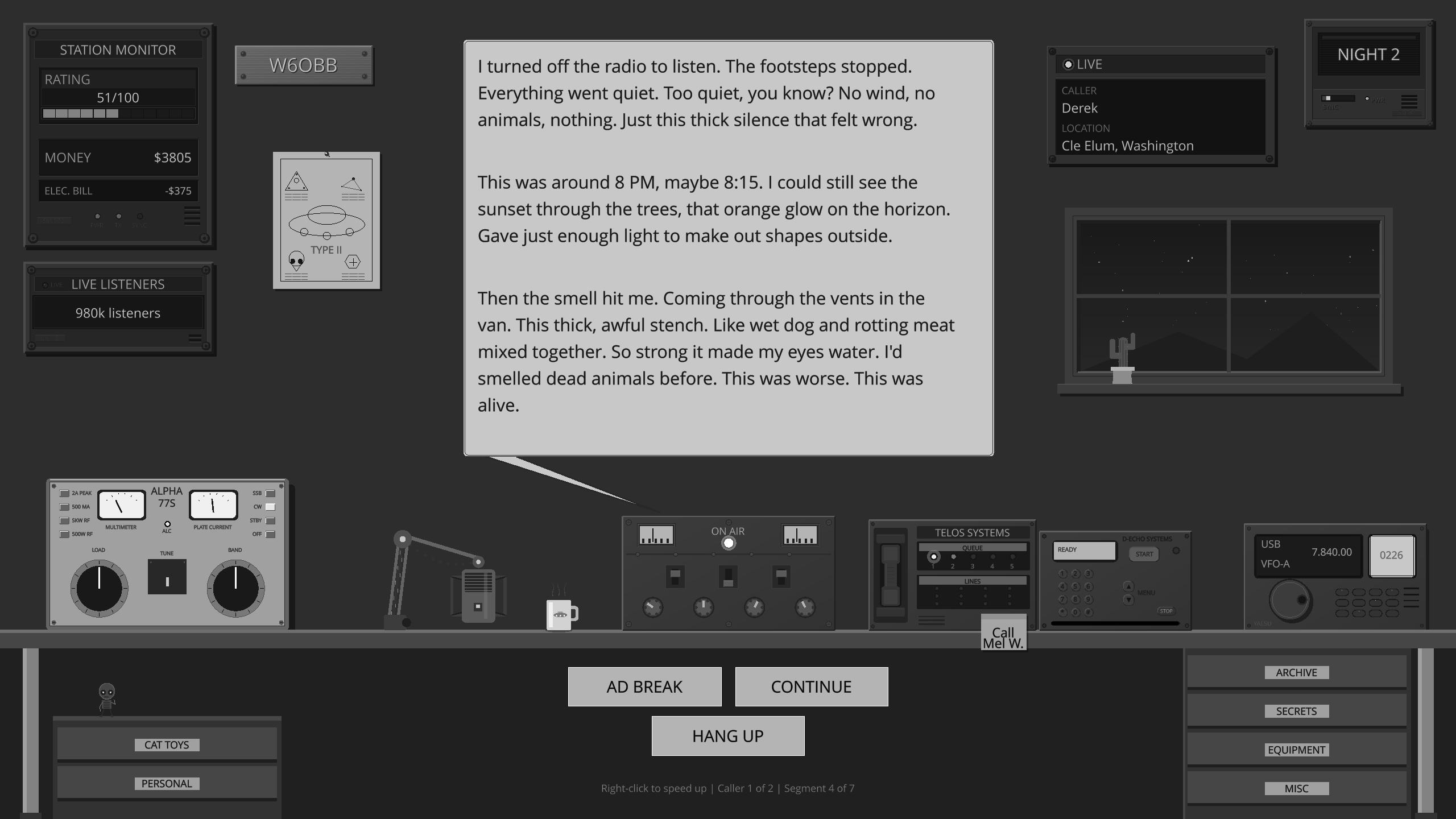
Ever wanted to host your own late-night paranormal radio show?
Across the Airwaves
You're on the air. Callers bring Mothman, Fresno Nightcrawlers, UFO sightings, reptilian autopsies, and whispers about AATIP and Project Blue Book. Every reply shapes how the night goes.

AI-Generated Summary
Two civilians reported a large, black, oblong object that split into four parts over Ojibwa, Wisconsin, on May 15, 1953. Military investigators noted the report was contradictory and suggested the object may have been a cloud.
This document is a military sighting report concerning an unidentified aerial phenomenon observed near Ojibwa, Wisconsin, on May 15, 1953. The report, filed by the 674th AC&W Squadron, details an observation made by two civilians, Jvel Sands and Bill Olsen, who were traveling in an automobile along a highway. The witnesses reported seeing one large, oblong-shaped black object that subsequently broke into four parts. These parts reportedly continued on a straight course in an easterly direction at an estimated speed of 120 mph. The observation lasted approximately 23 minutes. The witnesses, both of whom had prior military service but no experience as pilots, stated that the object produced no sound, left no trail or exhaust, and bore no resemblance to known aircraft. No optical or electronic equipment was used during the observation. The report notes that weather conditions were clear, with winds aloft at 5,000 feet from the NNW at 20 knots. Official analysis of the report highlights significant contradictions, specifically questioning how the objects could maintain a straight line at 120 mph while remaining visible for 23 minutes. The final conclusion suggests that the object may have been a cloud, and the report is marked as having conflicting data regarding the duration and motion of the sighting.
How could objects travel straight line at 120 mph and remain visible 23 minutes? Too contradictory.
PDF not loading? Download the PDF directly
Official Assessment
The description of the object sounds like the object was a cloud.
The report notes conflicting data regarding the duration of the sighting and the motion of the object. The observers were in a car, which may have affected the accuracy of their estimations of speed, shape, and maneuvers.