Declassified UFO / UAP Document
Analysis of Material Samples 7:1 and 7:2
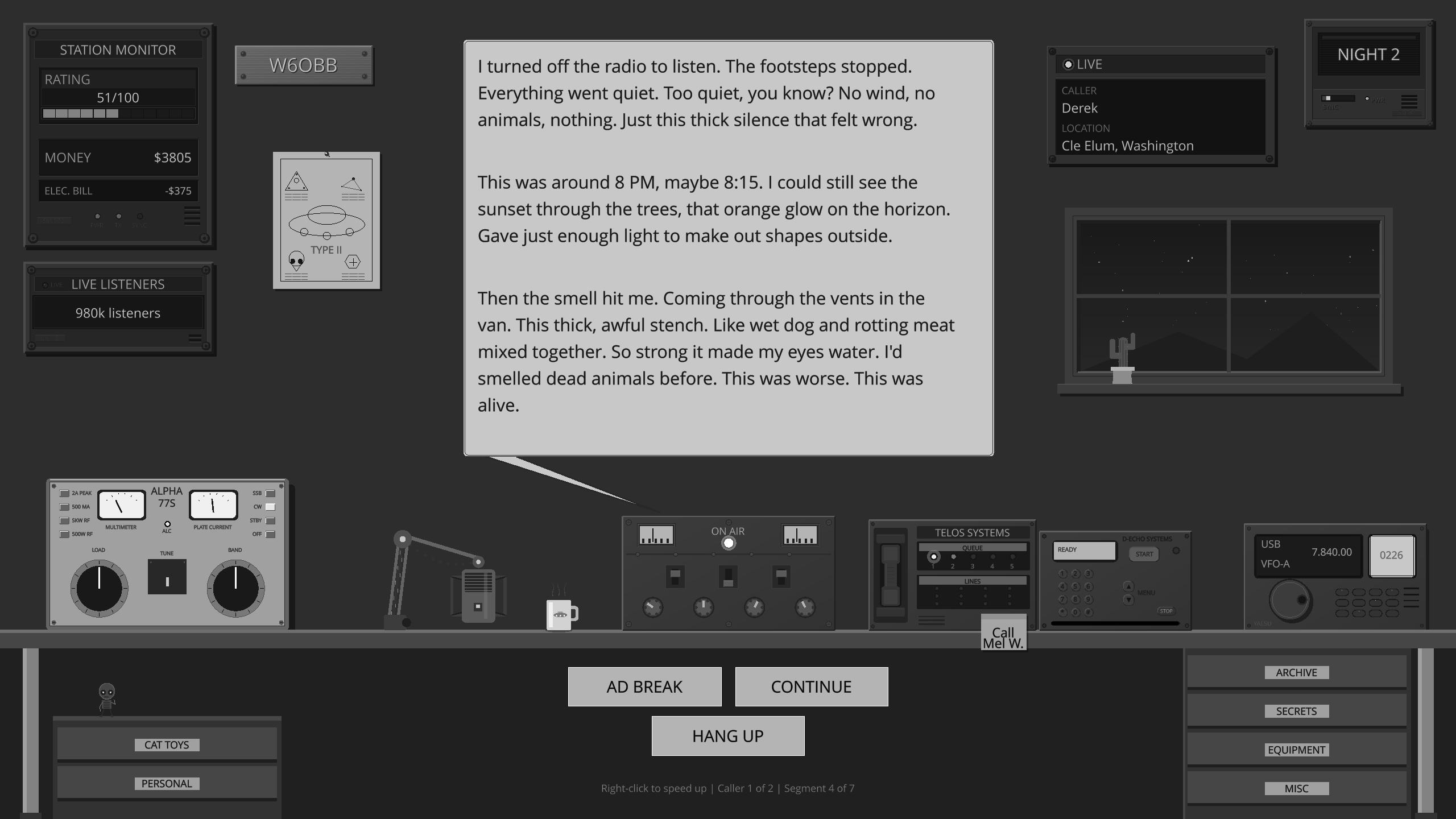
Ever wanted to host your own late-night paranormal radio show?
Across the Airwaves
You're on the air. Callers bring Mothman, Fresno Nightcrawlers, UFO sightings, reptilian autopsies, and whispers about AATIP and Project Blue Book. Every reply shapes how the night goes.

AI-Generated Summary
A 1946 metallurgical report identifies two material samples as heat-altered clay or alum shale. Spectral analysis confirmed identical chemical compositions for both the layered and slag-like samples.
This document, dated July 19, 1946, details a visit to Mining Engineer H. Pettersson at the Metallographic Institute regarding the analysis of two material samples, designated 7:1 (layered material) and 7:2 (slag-like material). The investigation sought to determine the nature of these samples, particularly those exhibiting layered structures in contact with slag-like material. Engineer Pettersson concluded that both samples likely originated from the same base material, specifically clay shale or alum shale. He explained that when such shale is subjected to high temperatures, it undergoes a transformation: the color shifts from black to dark gray, reddish, or yellowish, and the material's fissility increases. Upon reaching a certain temperature threshold, the base material melts and releases gas, resulting in the observed slag-like structure with oriented air bubbles. Sample 7 was identified as clay shale exposed to high heat, with the black, highly fractured portion being the least altered. A comparative spectral analysis confirmed that there is no significant difference in the chemical composition of the two materials. Both contain aluminum, magnesium, iron, and silicon as primary components, with smaller amounts of manganese, vanadium, and titanium. Further chemical analysis to determine the specific ratios of silicon, aluminum, and iron was initiated.
Då temperaturen höjes över en viss gräns, avger grundmassan gas under samtidig smältning, varigenom en slaggartad struktur uppstår, i vilken de inneslutna luftblåsorna visa en skiktad orientering.
PDF not loading? Download the PDF directly
Official Assessment
The samples are likely clay shale or alum shale that has been subjected to high temperatures, causing melting and the formation of slag-like structures.
Comparative spectral analysis shows no difference in composition between the layered (7:1) and slag-like (7:2) materials. Both contain aluminum, magnesium, iron, silicon, manganese, vanadium, and titanium.
Key Persons
- H. PetterssonMining Engineer at the Metallographic Institute