Declassified UFO / UAP Document
Analysis of Material Samples 4:2 through 4:5
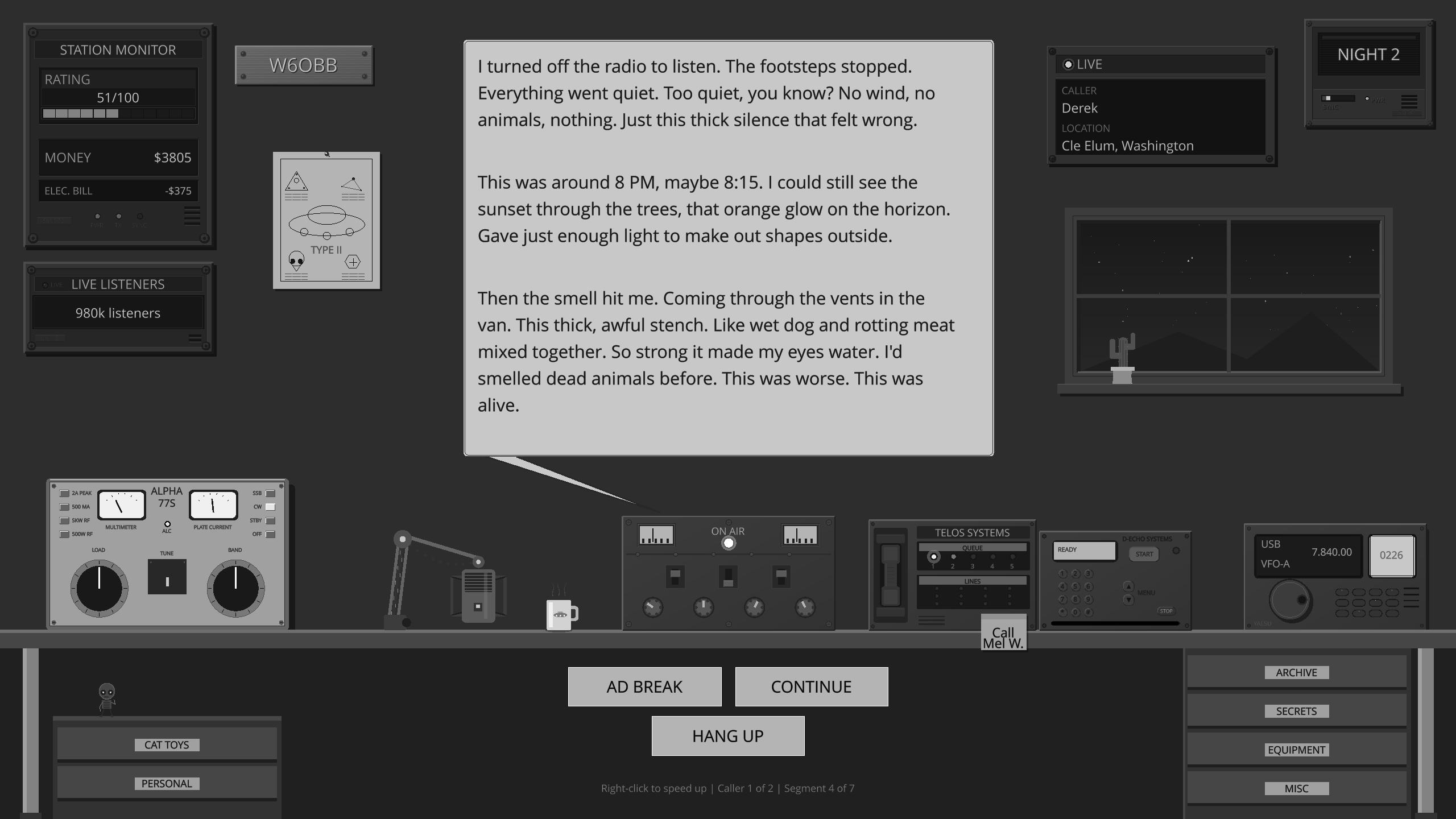
Ever wanted to host your own late-night paranormal radio show?
Across the Airwaves
You're on the air. Callers bring Mothman, Fresno Nightcrawlers, UFO sightings, reptilian autopsies, and whispers about AATIP and Project Blue Book. Every reply shapes how the night goes.

AI-Generated Summary
A technical report from 1946 detailing the spectral analysis of slag samples 4:2-4:5. Experts concluded the samples likely share a common origin despite varying appearances due to different heating temperatures.
This document, page 12 of a larger report, details the technical analysis of material samples categorized as 4:2 through 4:5. The samples, described as small pieces in a larger box, were subjected to volume weight determination using the displacement method, yielding values between 0.6 and 0.9. Ash content analysis for samples 4:3 and 4:4 showed significant variation. On July 18, 1946, a consultation was held with Mining Engineer H. Pettersson at the Metallografiska Institutet to discuss the nature of the slag. Pettersson hypothesized that the samples might share a common origin but had been subjected to different heating temperatures. Further spectral analysis of group 4:2 samples—which included a piece resembling a previously described 2:2 sample, a piece with black shaly material, and a highly porous brick-colored slag—revealed no significant compositional differences. The primary constituents identified were aluminum, magnesium, iron, and silicon, with trace amounts of manganese, vanadium, and titanium. The report concludes that it is possible the diverse samples share a common origin.
Om detta fynd uttryckte han en förmodan, att de olika provstyckena skulle kunna ha saarna ursprung men varit upphettade till olika temperaturer.
PDF not loading? Download the PDF directly
Official Assessment
The samples may have the same origin but have been heated to different temperatures.
Qualitative spectral analysis showed no significant differences in composition between the samples. The main components are aluminum, magnesium, iron, and silicon, with low levels of manganese, vanadium, and titanium.
Key Persons
- H. PetterssonBergsingenjör (Mining Engineer)