Declassified UFO / UAP Document
Theory of More Efficient Propulsion Method Explored
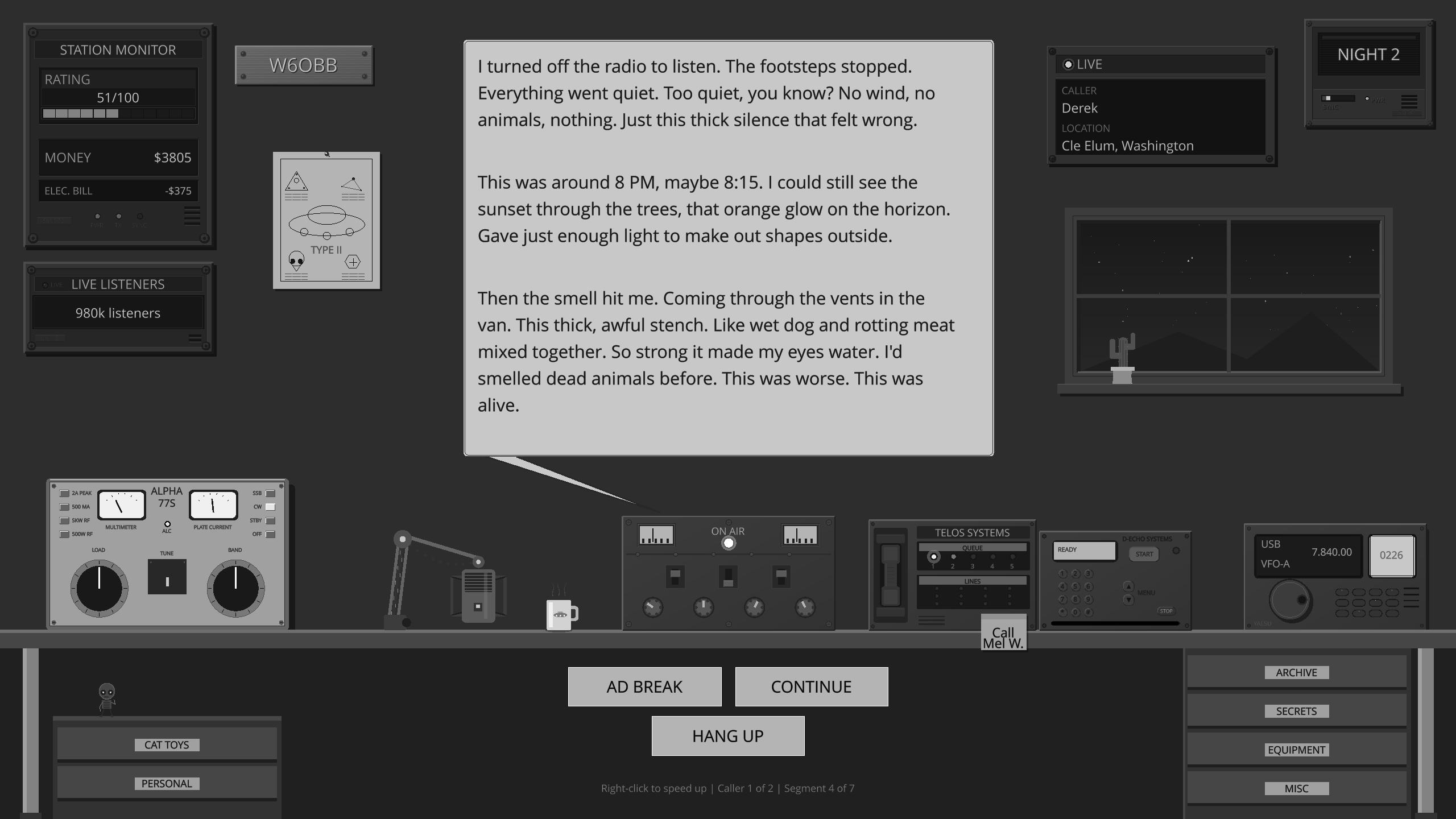
Ever wanted to host your own late-night paranormal radio show?
Across the Airwaves
You're on the air. Callers bring Mothman, Fresno Nightcrawlers, UFO sightings, reptilian autopsies, and whispers about AATIP and Project Blue Book. Every reply shapes how the night goes.

AI-Generated Summary
This report outlines a theoretical spacecraft propulsion system based on high-temperature superconductivity and electron acceleration. It describes experimental tests on superconducting models that reportedly exhibited instantaneous movement.
This document, a 1993 JPRS report, details a theoretical propulsion concept proposed by V. Shabetnik, a senior scientific associate at the NPO of Experimental Machine Building. The article, authored by Lieutenant Colonel V. Maksimovskiy, argues that traditional rocket propulsion is inefficient and proposes a new method based on high-temperature superconductivity. Shabetnik suggests that a spherical spacecraft, covered in a superconductive layer and equipped with three high-velocity electron accelerators, could achieve propulsion by interacting with the surrounding space, effectively creating a propellant-free engine. The document references a 1959 experiment by P. Oshchepkov regarding energy conversion as a foundational basis for these ideas. Furthermore, the report notes that experimental models using Y-Ba-Cu-0 type superconductors were tested in March and May of 1992, demonstrating a force of more than 22.5 grams. The author claims that these models exhibited instantaneous movements and changes in direction, drawing a comparison to 'flying saucers.' The report concludes by suggesting that while many obstacles remain, the development of a 5-meter prototype is a necessary next step for this technology.
It is interesting that models in the experiment moved like ''flying saucers.'' Movements and changes in direction were instantaneous.
PDF not loading? Download the PDF directly
Official Assessment
The document outlines a theoretical propulsion system proposed by V. Shabetnik, utilizing high-temperature superconductivity and electron accelerators to create a propellant-free spacecraft. Experimental models using Y-Ba-Cu-0 type superconductors have been tested, and the author suggests that such technology could lead to advanced, spherical spacecraft capable of instantaneous movement.
Key Persons
- V. ShabetnikSenior scientific associate of the NPO of Experimental Machine Building
- P. OshchepkovScientist
- V. PalloChairman of the enterprise's Astronautics Federation Committee