Declassified UFO / UAP Document
Project Blue Book Special Report No. 14 (Analysis of Reports of Unidentified Aerial Objects)
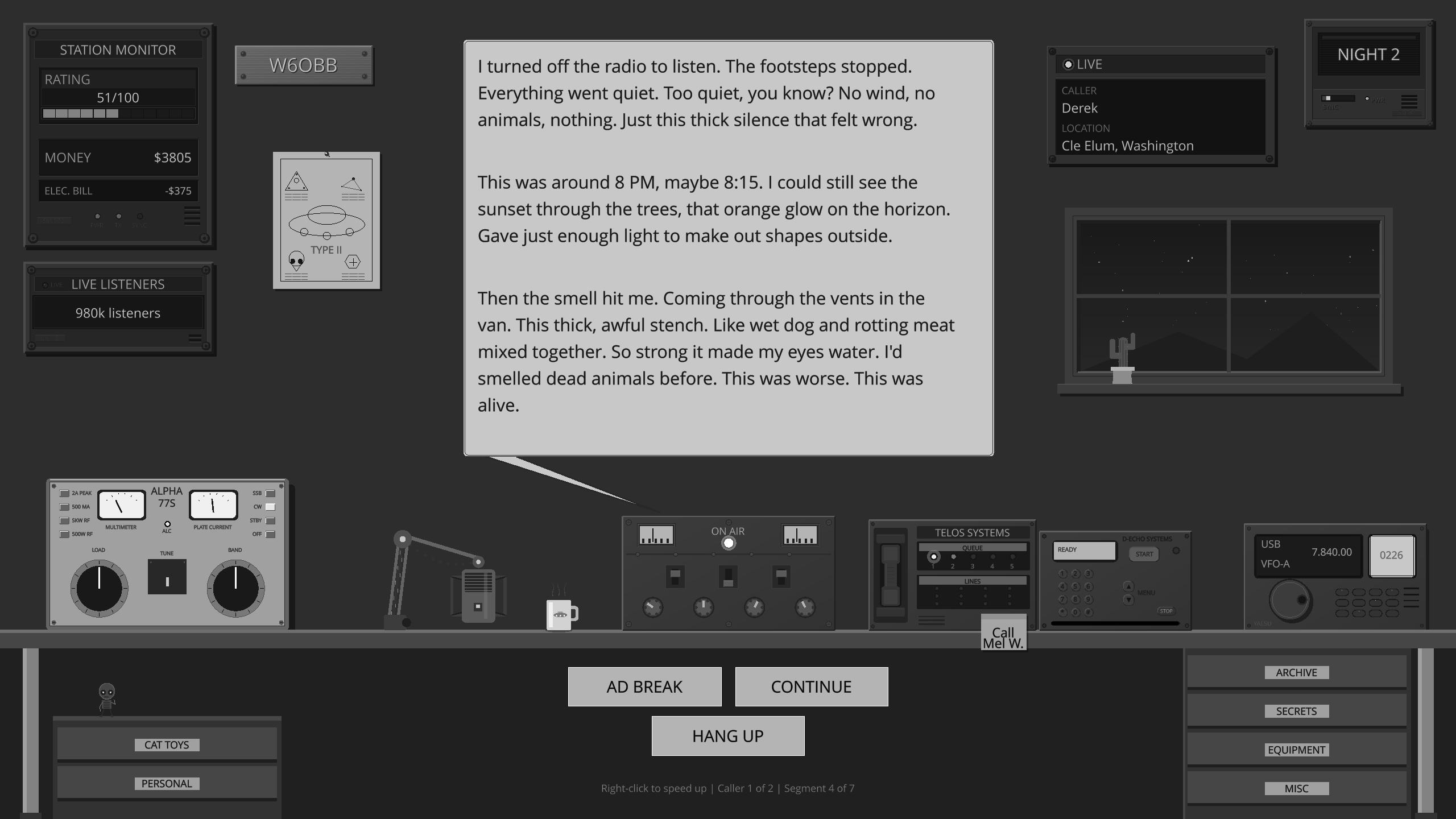
Ever wanted to host your own late-night paranormal radio show?
Across the Airwaves
You're on the air. Callers bring Mothman, Fresno Nightcrawlers, UFO sightings, reptilian autopsies, and whispers about AATIP and Project Blue Book. Every reply shapes how the night goes.

AI-Generated Summary
This document is the official 1955 Air Force statistical analysis of UFO reports from 1947-1952. It concludes that no evidence of 'flying saucers' was found and that all sightings could likely be explained by conventional phenomena.
Project Blue Book Special Report No. 14, issued on May 5, 1955, by the Air Technical Intelligence Center at Wright-Patterson Air Force Base, provides a comprehensive statistical analysis of 3,201 reports of unidentified aerial objects received by the U.S. Air Force between 1947 and 1952. The report was initiated to determine if these sightings represented a threat to national security or evidence of advanced technological developments unknown to the United States. The methodology involved reducing subjective sighting reports into a standardized, mechanized format using IBM punched cards to facilitate statistical analysis. The study categorized sightings into several groups, including balloons, aircraft, astronomical phenomena, and 'unknowns.' The analysis examined various characteristics such as color, number of objects, shape, duration, speed, and light brightness. Statistical tests, specifically the Chi Square Test, were applied to compare the distributions of 'knowns' and 'unknowns' to determine if they originated from the same population. The report concludes that there is no evidence of the existence of 'flying saucers' and that the vast majority of sightings could be explained as misinterpretations of conventional objects or natural phenomena. The report emphasizes that the number of unexplained cases decreased as investigation methods improved. It further notes that the remaining 'unknowns' were likely due to insufficient observational data or human error in estimating physical characteristics like size, distance, and speed. The document includes extensive tables and figures detailing the statistical breakdown of the data by year, month, location, and various object characteristics. It also provides summaries of 12 specific 'good' unknown cases, though it concludes that even these cases could not be used to derive a verified model of a 'flying saucer.' The report concludes that it is highly improbable that any of the reported objects represent technological developments outside the range of present-day scientific knowledge, and that the public perception of 'flying saucers' as sinister or mysterious is largely a result of sensationalized media coverage rather than factual evidence.
No evidence of the existence of the popularly-termed "flying saucers" was found.
PDF not loading? Download the PDF directly
Official Assessment
No evidence of the existence of the popularly-termed "flying saucers" was found.
The study concluded that reports of unidentified aerial objects did not constitute a threat to the security of the U.S. and that it is highly improbable that such reports represent observations of technological developments outside the range of present-day scientific knowledge.
Key Persons
- Donald A. QuarlesSecretary of the Air Force
- J. Allen HynekDirector of the Emerson McMillin Observatory of The Ohio State University
- Kenneth ArnoldBoise, Idaho, businessman and private pilot
- Stanton T. FriedmanNuclear Physicist-Lecturer