Declassified UFO / UAP Document
l'absence de preuves scientifiques... et ses conséquences LDLN, No 405, DÉC. 2011
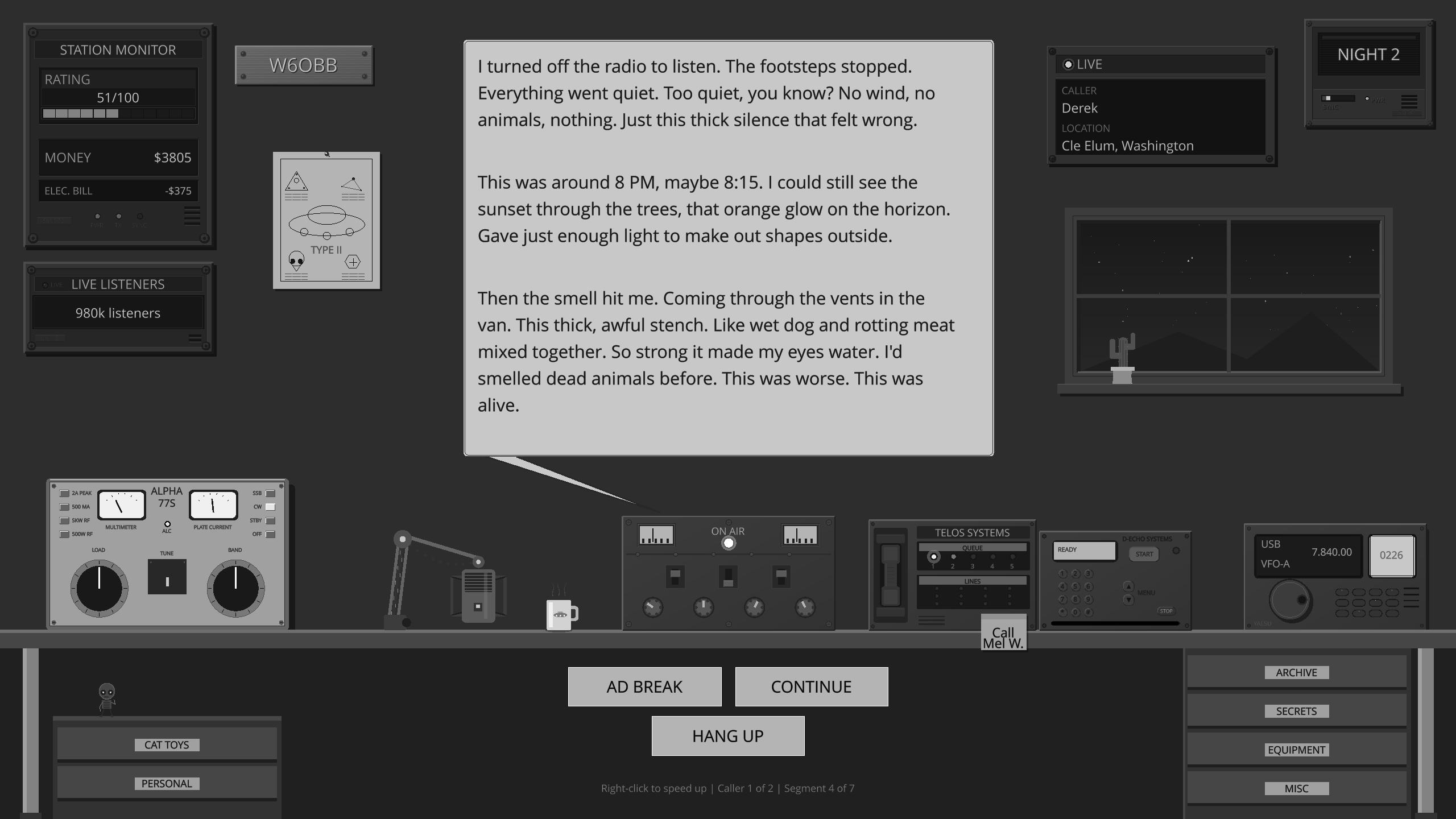
Ever wanted to host your own late-night paranormal radio show?
Across the Airwaves
You're on the air. Callers bring Mothman, Fresno Nightcrawlers, UFO sightings, reptilian autopsies, and whispers about AATIP and Project Blue Book. Every reply shapes how the night goes.
AI-Generated Summary
This article from the December 2011 issue of LDLN examines the ongoing struggle to obtain scientific proof for UFO phenomena in France. It emphasizes the need for rigorous research standards and highlights the challenges of interpreting low-quality evidence like photographs and radar data.
This article, published in the December 2011 issue of LDLN (No. 405), discusses the persistent lack of scientific evidence regarding Unidentified Aerial Phenomena (UAP/UFOs) and the consequences this has for the field of ufology. The author, identified as J.M., reflects on the state of research in France over the previous 35 years, noting that despite a large volume of available data, the core problem of proving the existence of these phenomena remains unsolved. The text highlights that media and public interest often focus on the absence of proof, which creates a cycle of frustration. The author cites specific historical examples, such as the June 1963 sighting involving Jacques Bonabot and Maurice Thil, to illustrate how historical cases are often fraught with errors that require careful rectification. A significant portion of the text addresses the quality of evidence collected by the organization. The author notes that many photographs submitted are of little scientific value, often showing small, insignificant anomalies. Furthermore, the author addresses the difficulty of interpreting physical traces, which have become increasingly rare and difficult to analyze. Radar data is also mentioned as being generally unreliable. The author concludes by acknowledging the limitations of the current research environment, noting that the magazine is produced by a single individual struggling with administrative burdens. The article serves as a call for greater rigor, patience, and a commitment to sticking to the facts rather than drawing premature conclusions, despite the challenges inherent in the field.
Les preuves seront d'autant plus « difficiles à établir », que les instances compétentes s'efforceront de ne surtout pas les rechercher.
PDF not loading? Download the PDF directly
Official Assessment
The author argues that the lack of scientific evidence for UFOs remains the primary obstacle in the field. Despite decades of data collection, the quality of evidence has not improved, and the author emphasizes the need for rigor and patience in future research.
Key Persons
- Jacques BonabotIndividual involved in a UFO sighting in June 1963
- Maurice ThilIndividual involved in a UFO sighting