Declassified UFO / UAP Document
Some Comments on Alien Involvement
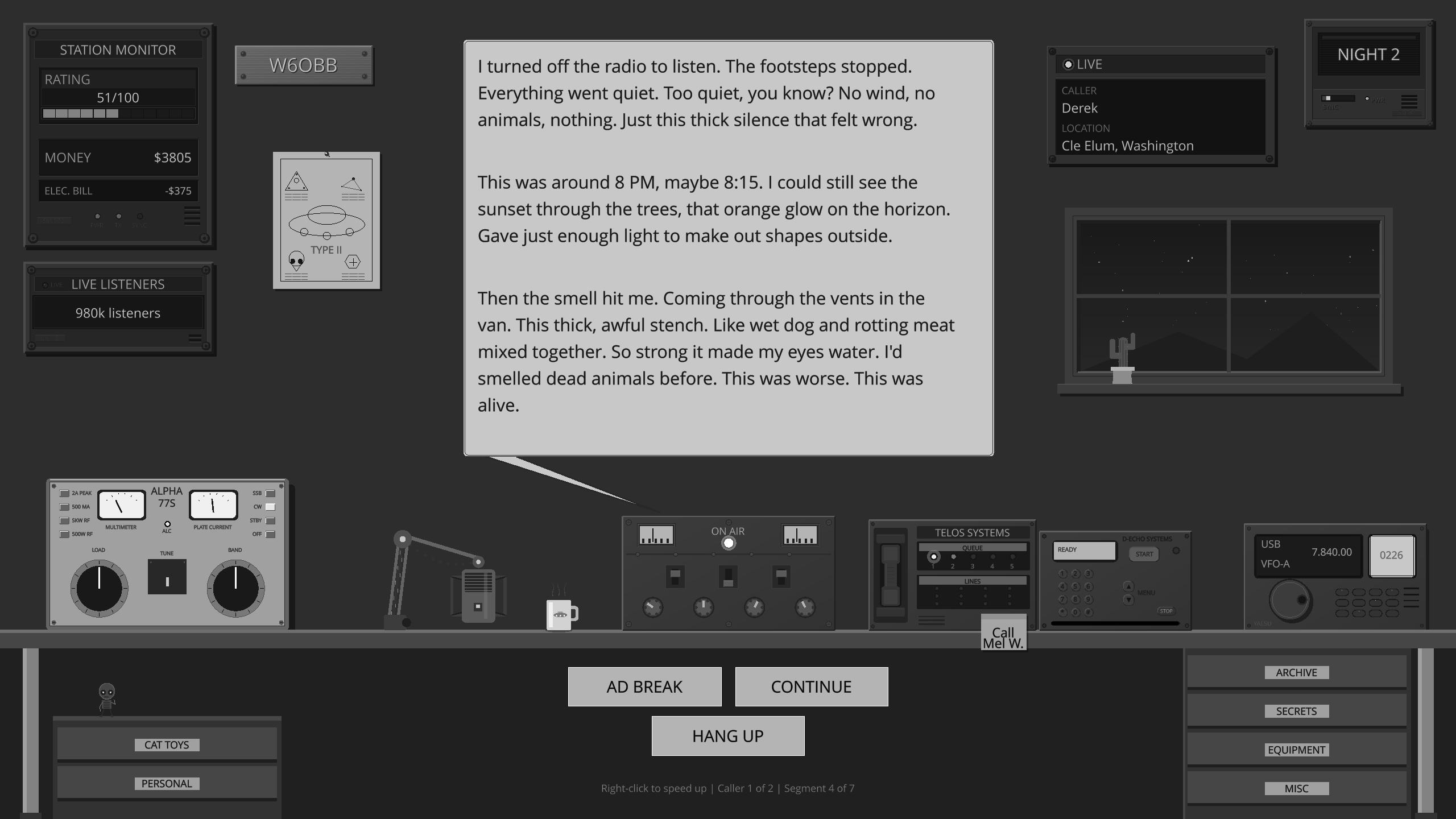
Ever wanted to host your own late-night paranormal radio show?
Across the Airwaves
You're on the air. Callers bring Mothman, Fresno Nightcrawlers, UFO sightings, reptilian autopsies, and whispers about AATIP and Project Blue Book. Every reply shapes how the night goes.

AI-Generated Summary
Adrian R. E. Cox provides a theoretical analysis of the ethics and psychological challenges of potential alien contact with humanity. The text also includes a personal column listing resources for UFO researchers and enthusiasts in the early 1960s.
This document, titled 'Some Comments on Alien Involvement' by Adrian R. E. Cox, serves as a critical response to an article by Wade Wellman titled 'Sense and Speculation.' Cox explores the theoretical implications of extraterrestrial contact, challenging the notion that alien civilizations would necessarily be interested in human affairs or that they would intervene in human evolution. Cox argues that if advanced civilizations exist, they would likely view humanity as a primitive race, and that any contact would be a delicate matter. He discusses the nature of the human mind, suggesting that current scientific understanding is limited and that the 'mind' acts as a 'pattern-maker' for brain activity. He draws parallels between human brain function and computer programming, noting that while our minds are not yet at the level of advanced alien races, they share a common nature. The document concludes that any interest alien races might have in humanity is likely beyond our current comprehension, and that we must wait for them to initiate public contact. The document also includes a 'Personal Column' section containing advertisements for back issues of 'Flying Saucer Review,' books, and contact information for various individuals involved in the study of UFOs, including Jacques Vallée, René Fouéré, and Waveney Girvan.
In the light of the above I do not find it quite so incomprehensible that Alien races should interest themselves in the fate of mankind. However, their way of showing their interest is very likely to be completely beyond our understanding for some time to come.
PDF not loading? Download the PDF directly
Official Assessment
The author argues that alien contact with humanity is a complex ethical and psychological issue. He posits that advanced races would likely observe humanity rather than intervene directly, and that human understanding of 'mind' and 'brain' is currently too primitive to comprehend the nature of potential alien contact.
Key Persons
- Wade WellmanAuthor of 'Sense and Speculation'
- Charles BowenAuthor of 'South American Republics are Watching the Skies'
- Jeane DixonSubject of interpretation regarding a vision
- Jacques ValléeRecipient of inquiries regarding Flying Saucer Review
- Waveney GirvanAuthor of 'Flying Saucers and Commonsense'
- René FouéréRecipient of inquiries regarding Flying Saucer Review
- D. LloydRecipient of inquiries regarding Flying Saucer Review
- Miss S. StebbingSeller of UFO books