Declassified UFO / UAP Document
Bubble Generation in a Continuous Liquid Flow Under Reduced Gravity Conditions
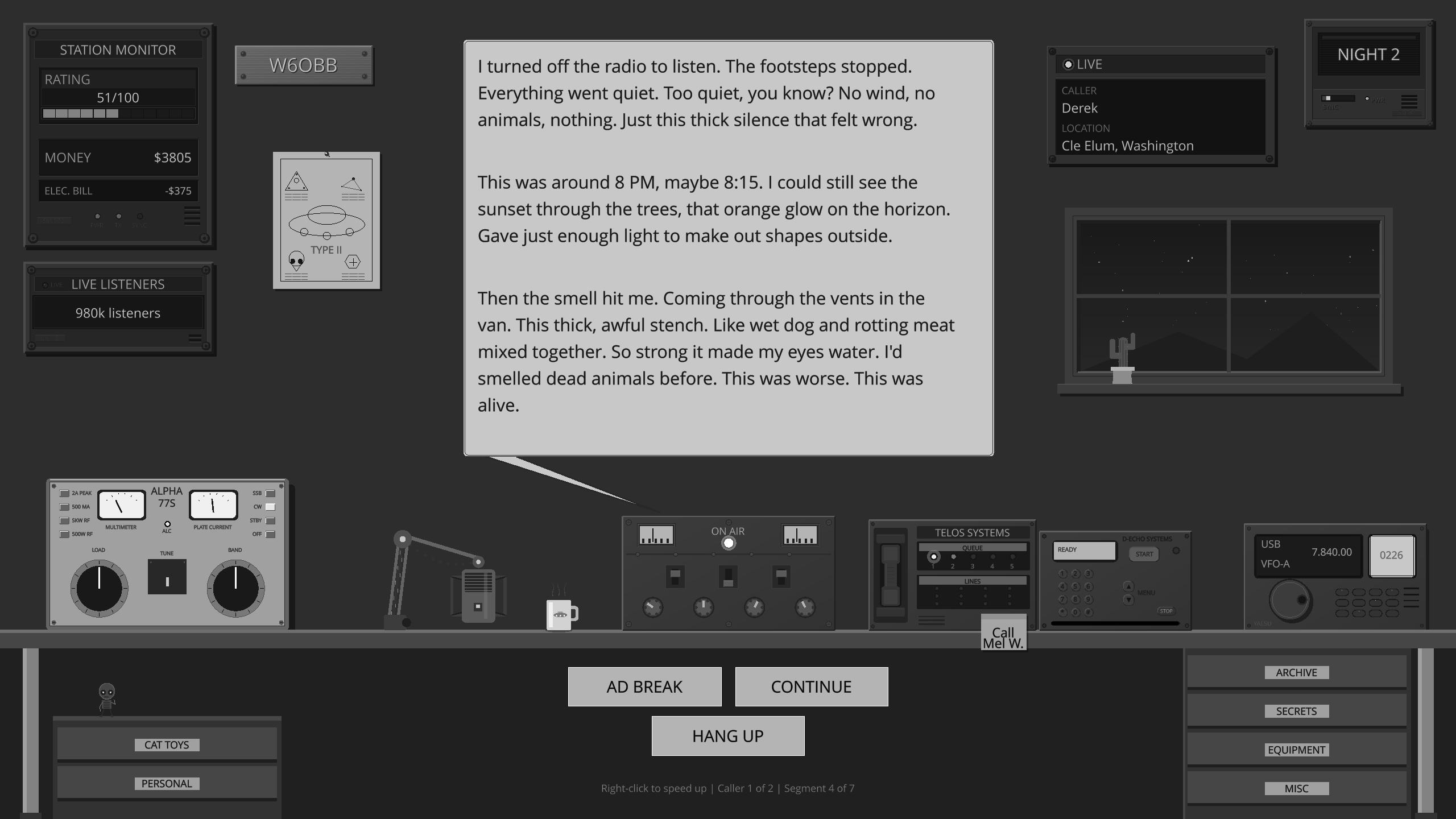
Ever wanted to host your own late-night paranormal radio show?
Across the Airwaves
You're on the air. Callers bring Mothman, Fresno Nightcrawlers, UFO sightings, reptilian autopsies, and whispers about AATIP and Project Blue Book. Every reply shapes how the night goes.

AI-Generated Summary
This NASA contractor report details experiments conducted on the DC-9 Reduced Gravity Aircraft regarding bubble generation in liquid flows. It establishes that bubbles are larger in reduced gravity environments and provides a theoretical model for predicting bubble detachment based on force balance.
This contractor report, authored by Salvatore Cezar Pais of Case Western Reserve University and published by NASA in July 1999, details an experimental study on bubble generation in continuous liquid flows under reduced gravity conditions. The research was conducted aboard the DC-9 Reduced Gravity Aircraft at the NASA Glenn Research Center using an air-water system. The study examined various flow configurations, including co-flow and cross-flow, utilizing three different flow tube diameters (1.27, 1.9, and 2.54 cm) and two ratios of air injection nozzle to tube diameters (0.1 and 0.2). The experiments varied gas and liquid volumetric flow rates between 10 and 200 ml/s. The findings indicate that bubble size is influenced by superficial liquid velocity, air injection nozzle diameter, and tube diameter. Specifically, increasing the liquid velocity resulted in smaller bubbles and higher formation frequencies. Conversely, increasing the nozzle or tube diameter led to larger detached bubbles. The report notes that while void fraction and flow regime transitions can be controlled by adjusting flow rates, single nozzle gas injection provides more uniform bubble size than multiple port injection, which is prone to unpredictable coalescence. A theoretical model based on force balance was developed to analyze single bubble generation. The model suggests that in reduced gravity, gas momentum flux promotes bubble detachment, while surface tension at the nozzle tip acts as an inhibiting force. The study concludes that bubbles are larger in reduced gravity environments than in normal gravity under similar conditions, and that the theoretical model's predictions align well with experimental results, except at higher superficial liquid velocities where bubble neck length deviates from the nozzle diameter.
It is shown that bubble diameter is larger in a reduced gravity environment than in a normal gravity environment at similar flow condition and flow geometry.
PDF not loading? Download the PDF directly
Official Assessment
The study found that bubble diameter increases with air injection nozzle diameter and tube diameter, while increasing superficial liquid velocity decreases bubble size and increases formation frequency. Under reduced gravity, gas momentum flux enhances bubble detachment, though surface tension at the nozzle tip inhibits it. Bubbles are generally larger in reduced gravity environments compared to normal gravity under similar conditions.
Key Persons
- JoAnne R. CalhounNASA Official