Declassified UFO / UAP Document
Blue Book UFO Reports at Sea by Ships: Analysis of the Blue Book Ship Database
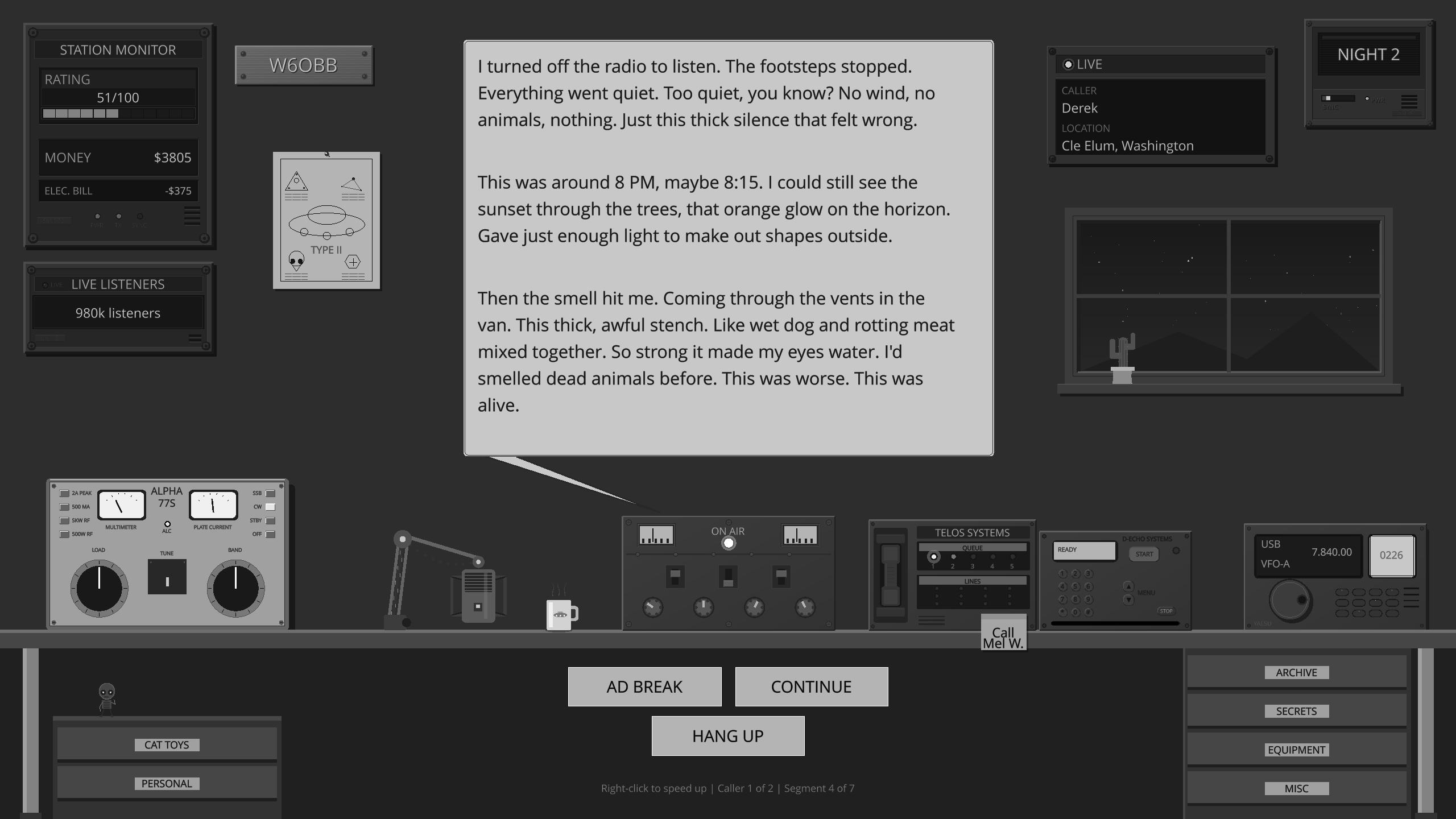
Ever wanted to host your own late-night paranormal radio show?
Across the Airwaves
You're on the air. Callers bring Mothman, Fresno Nightcrawlers, UFO sightings, reptilian autopsies, and whispers about AATIP and Project Blue Book. Every reply shapes how the night goes.

AI-Generated Summary
This analysis of 258 ship-based UFO reports submitted to Project Blue Book (1948-1968) concludes that only 2% were classified as unknown. The study finds that most reports were of poor quality and that satellite sightings were the most common explanation, indicating that reporting systems functioned as early warning tools rather than scientific investigative instruments.
This document, authored by A.F. Rullán in 2002, provides a comprehensive analysis of UFO reports submitted by ships at sea to the United States Air Force's Project Blue Book between 1948 and 1968. The study focuses on reports from the Atlantic and Pacific Oceans, excluding coastal sightings, to better understand the mechanisms and quality of reporting by Navy, Coast Guard, and commercial vessels. The author generated a database of 258 ship-based UFO reports after screening over 14,000 entries in the Project Blue Book files. The analysis reveals that only 2% of these ship-based reports were ultimately classified as 'unknown' by Blue Book. The study highlights that the primary driver for the peak in reports during the early 1960s was the misidentification of satellites as UFOs, which accounted for 36% of all explanations given by Blue Book for ship reports. Other common explanations included insufficient information, meteors, and missile/rocket launches. The document examines the reporting instructions used, specifically JANAP-146 (MERINT reports) and OPNAV Instruction 3820. It concludes that these systems were designed as early warning mechanisms for national defense rather than for the scientific investigation of anomalous phenomena. Consequently, the quality of the data received was generally poor, with 64% of reports failing to meet minimum information requirements. The author notes significant inconsistencies in how different commands implemented reporting instructions, suggesting that the submission of reports was often more dependent on the individual ship's commander than on standardized military procedures. The study also provides detailed case studies of notable incidents, such as the MV Marcala sighting in 1950 and the USS Gyatt radar incident in 1964, to illustrate the challenges in evaluating these reports. Ultimately, the document argues that despite the existence of an extensive information tracking system, the military lacked the capability to effectively evaluate true anomalous sightings, and that poor training contributed to the flooding of reporting channels with identifiable objects.
It seems that MERINT reporting was more of an early warning mechanism rather than a quality instrument for investigating and identifying unknown targets.
PDF not loading? Download the PDF directly
Official Assessment
The study found that only 2% of ship-reported UFO cases were categorized as unknown by Blue Book. The majority of reports were of poor quality, and satellite sightings were the most common explanation for UFO reports at sea, particularly between 1960 and 1965. Reporting consistency varied significantly between Navy and Coast Guard commands, and the MERINT/OPNAV reporting systems functioned primarily as early warning mechanisms rather than tools for scientific investigation.
Key Persons
- Matthew Fontaine MauryCommander of the naval Oceanographic Office 1842-1862
- Edward CondonLead of the University of Colorado study
- Joseph F. BouchardCaptain USN
- J. Allen HynekDr.