Declassified UFO / UAP Document
Concatenated JPRS Reports, 1993 — Taagepera, POSTIMEES Editor View October Elections
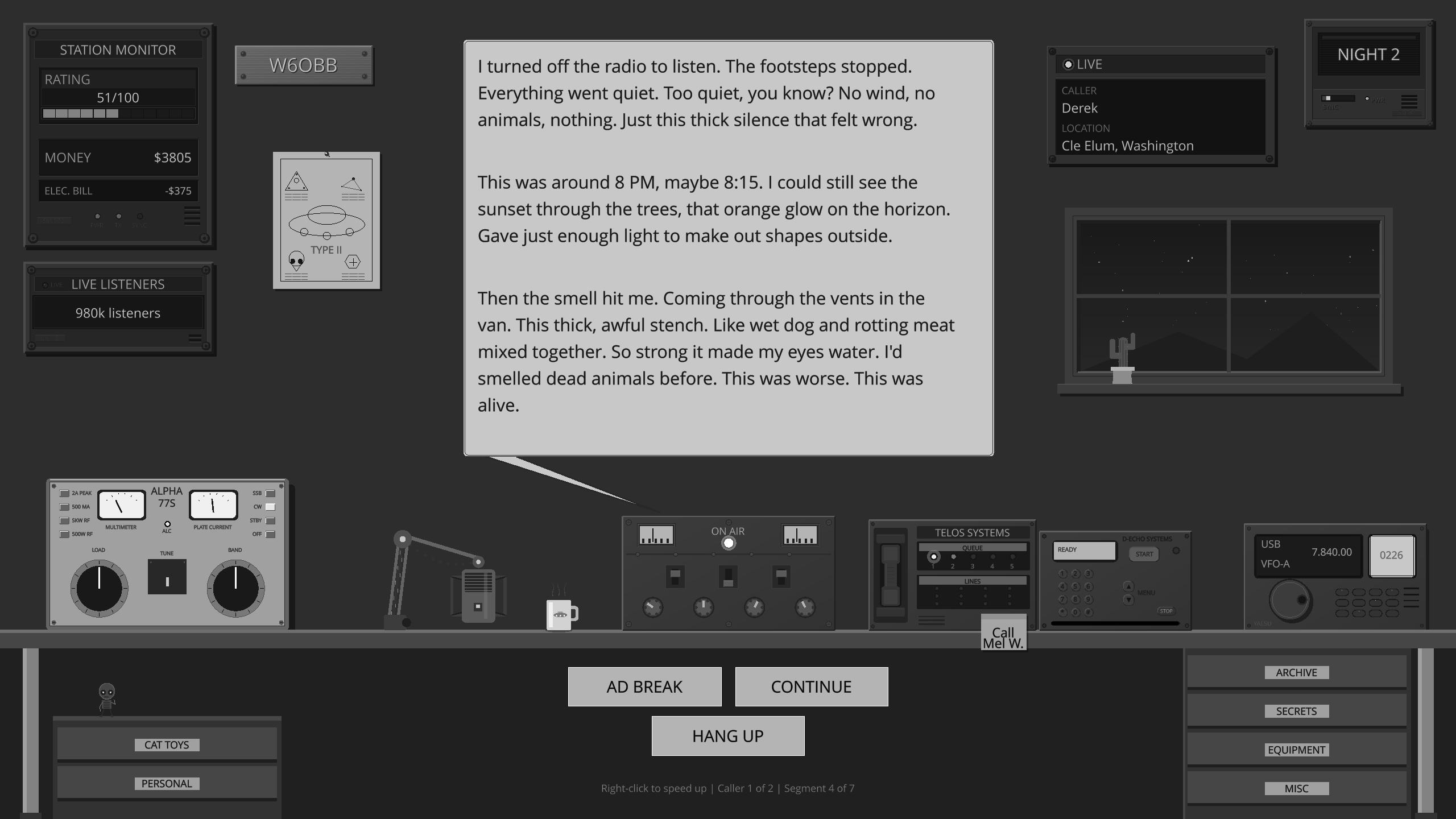
Ever wanted to host your own late-night paranormal radio show?
Across the Airwaves
You're on the air. Callers bring Mothman, Fresno Nightcrawlers, UFO sightings, reptilian autopsies, and whispers about AATIP and Project Blue Book. Every reply shapes how the night goes.

AI-Generated Summary
This 1993 JPRS report analyzes the nascent political party system in post-Soviet Estonia. It concludes that political activity is driven by individual personalities rather than established party structures.
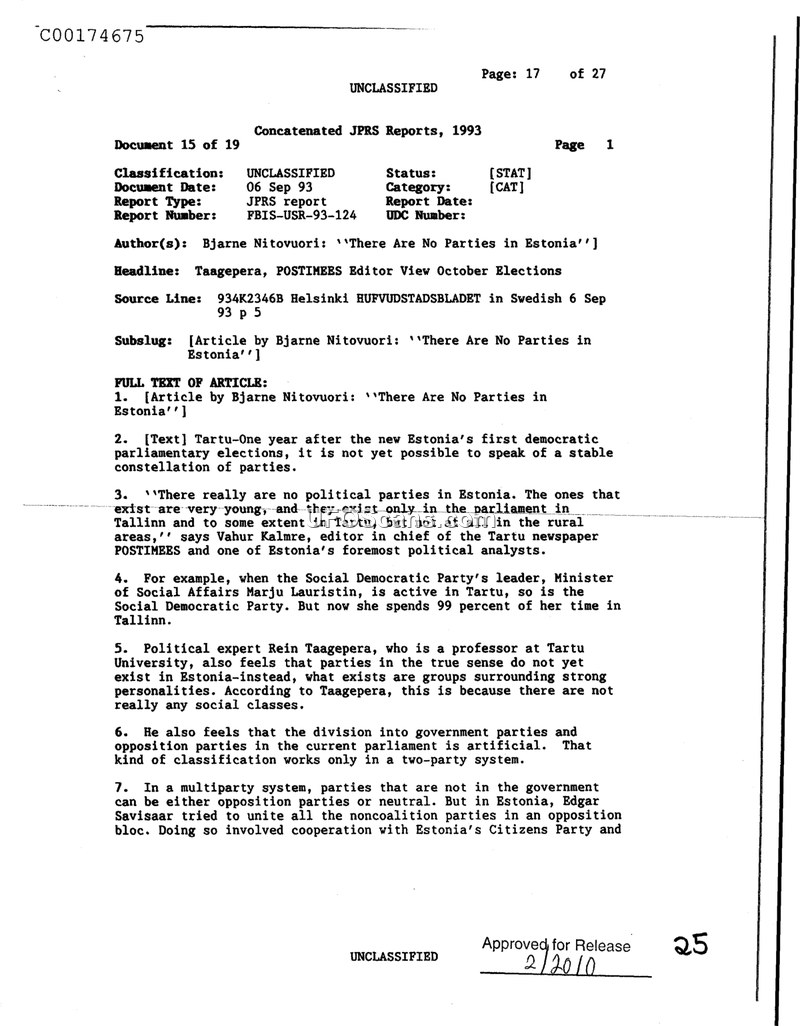
This document is a JPRS report dated September 6, 1993, titled 'There Are No Parties in Estonia,' authored by Bjarne Nitovuori. It provides an assessment of the political landscape in Estonia one year following the country's first democratic parliamentary elections. The report argues that a stable constellation of political parties has not yet formed. According to Vahur Kalmre, editor-in-chief of the Tartu newspaper POSTIMEES, political parties in Estonia are very young and exist primarily within the parliament rather than in rural areas. The report highlights the observations of political expert and Tartu University professor Rein Taagepera, who contends that parties in the traditional sense do not exist in Estonia. Instead, Taagepera suggests that political life is dominated by groups surrounding strong personalities, a situation he attributes to the lack of distinct social classes. The text further notes that the division between government and opposition parties is considered artificial, as it does not fit the reality of the Estonian political system. Finally, the report mentions efforts by Edgar Savisaar to organize an opposition bloc by attempting to unite non-coalition parties, including cooperation with Estonia's Citizens Party.
There really are no political parties in Estonia. The ones that exist are very young, and they exist only in the parliament in Tallinn and to some extent in Tartu, but not at all in the rural areas,
Rendered preview of the original document image. Download original file
Official Assessment
The document asserts that one year after Estonia's first democratic parliamentary elections, a stable political party system has not yet emerged. Political analysts suggest that parties are young, largely confined to the parliament, and that political activity is driven by strong personalities rather than established social classes or party structures.
Key Persons
- Vahur KalmreEditor in chief of the Tartu newspaper POSTIMEES
- Marju LauristinMinister of Social Affairs
- Rein TaageperaPolitical expert and professor at Tartu University
- Edgar SavisaarPolitician