Declassified UFO / UAP Document
JPRS-UPA-89-021: Religion
Ever wanted to host your own late-night paranormal radio show?
Across the Airwaves
You're on the air. Callers bring Mothman, Fresno Nightcrawlers, UFO sightings, reptilian autopsies, and whispers about AATIP and Project Blue Book. Every reply shapes how the night goes.

AI-Generated Summary
This document reports on 1989 sociological findings regarding religious interest among Soviet youth and local administrative efforts to manage religious activities. It highlights a disconnect between state-mandated atheism and the continued cultural relevance of religious texts.
This document, dated April 4, 1989, is a compilation of reports regarding religious life and sociological trends within the Soviet Union. It features a narrative account of a dialogue with A. Volotina, the chairwoman of the Ust-Pechengsk rural soviet, concerning the presence of religious practices in her jurisdiction, including the baptism of children by Komsomol members. The text highlights the tension between official state atheism and the continued interest in religious traditions among the populace. Additionally, the document includes a summary of a sociological study conducted by the Scientific Research Center of the Higher Komsomol School. This study surveyed 420 students in Moscow and Leningrad, finding that approximately 40 percent of the youth intelligentsia were familiar with religious literature, such as the Bible and the Koran. The report notes that young people are drawn to these texts for their historical and literary value, as well as for their perceived wisdom and humanism. The document concludes with observations on the administrative handling of religious information, noting that local officials, such as N. Voronin of the Vologodskaya Oblast council on religious matters, often restricted the dissemination of data regarding religious activities under 'secret' stamps.
The process of renewing society has made the problem of the human being, his spirituality and morality, paramount.
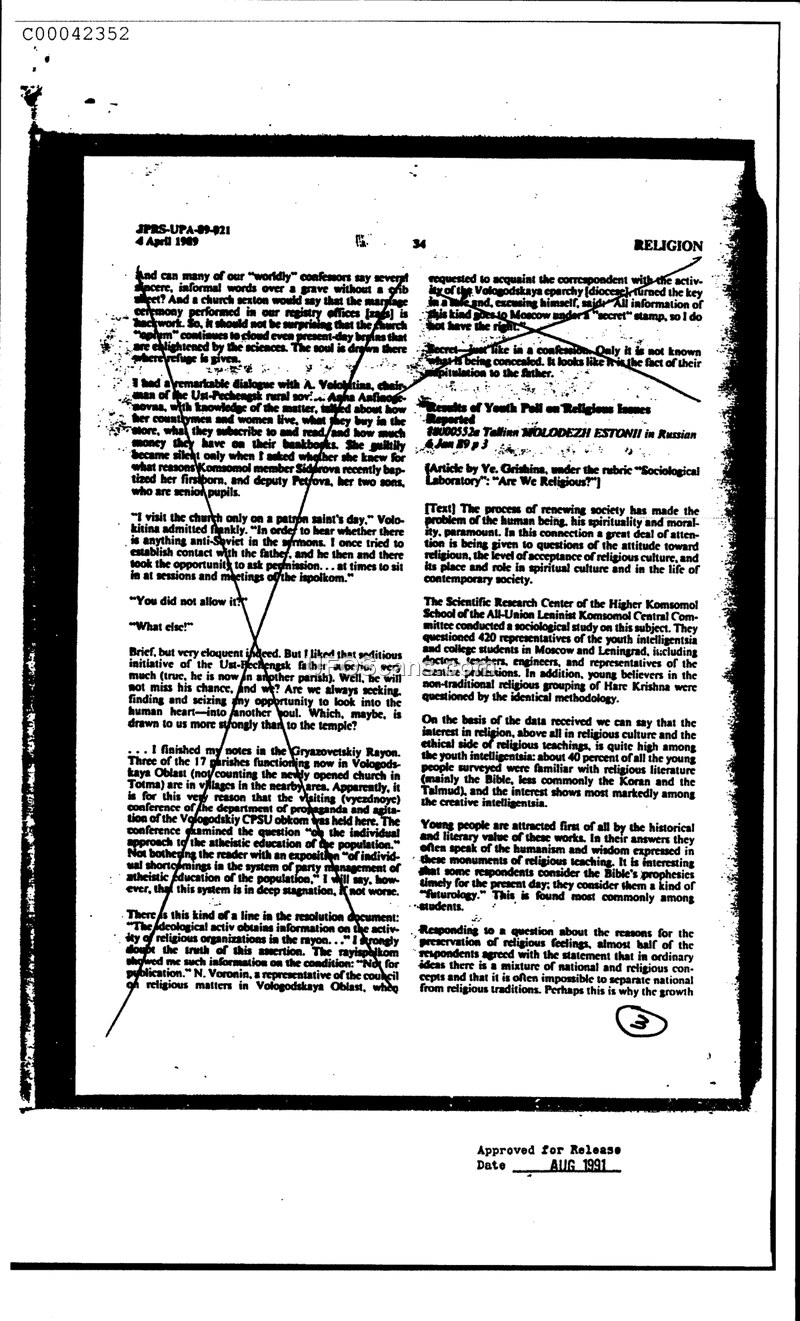
Rendered preview of the original document image. Download original file
Official Assessment
The document discusses the persistence of religious interest among Soviet youth and the administrative challenges faced by local officials in managing religious activities in the Vologodskaya Oblast.
Key Persons
- A. VolotinaChairwoman of the Ust-Pechengsk rural soviet
- SidorovaKomsomol member
- PetrovaDeputy
- Ye. GrishinaAuthor of the article 'Are We Religious?'
- N. VoroninRepresentative of the council on religious matters in Vologodskaya Oblast