Declassified UFO / UAP Document
Unidentified Flying Objects — Policy and Policy Statements
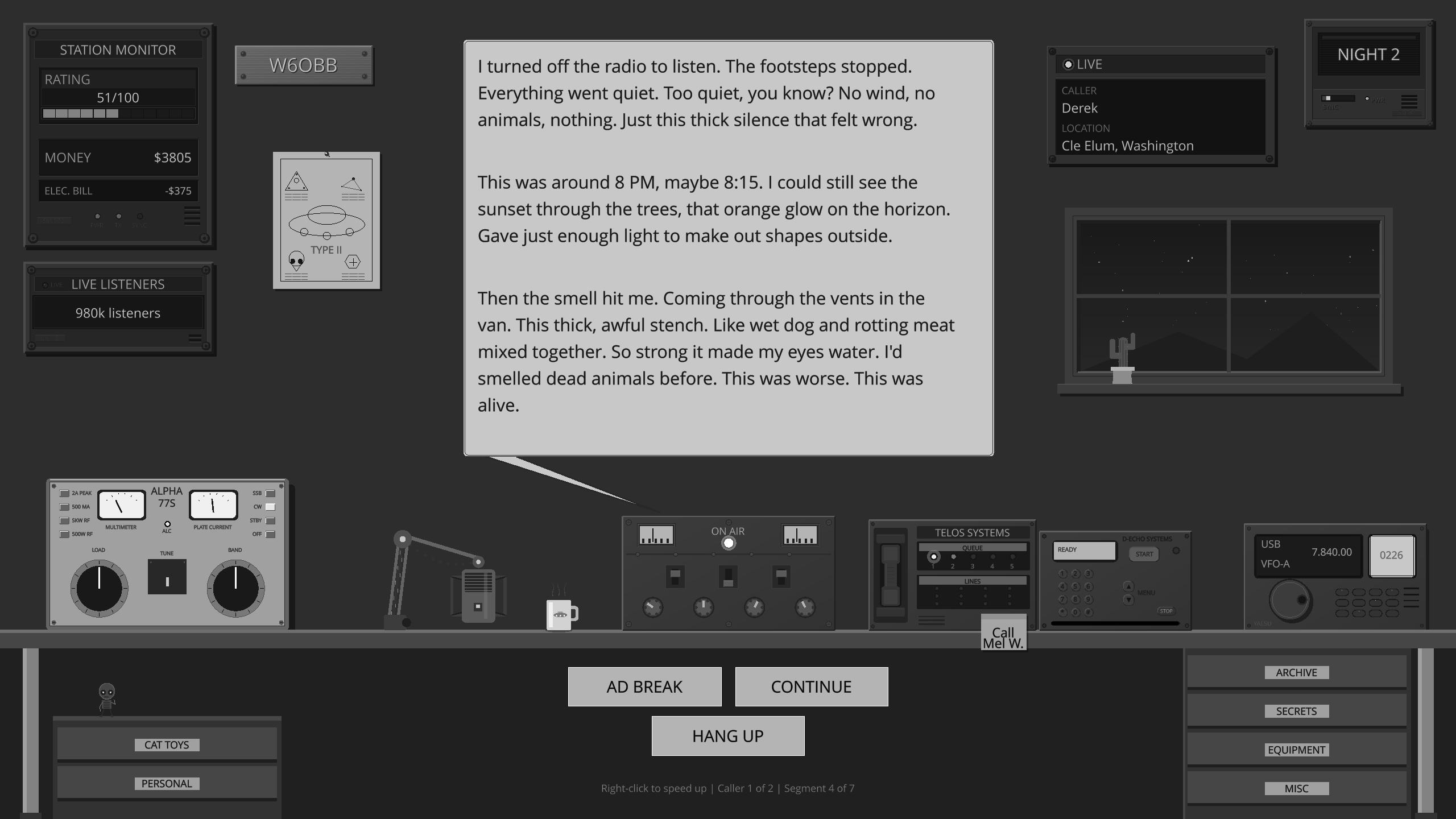
Ever wanted to host your own late-night paranormal radio show?
Across the Airwaves
You're on the air. Callers bring Mothman, Fresno Nightcrawlers, UFO sightings, reptilian autopsies, and whispers about AATIP and Project Blue Book. Every reply shapes how the night goes.

AI-Generated Summary
This file documents the Ministry of Defence's internal policy regarding UFO reports, confirming that investigations were limited to defence implications. It details the MOD's refusal to grant public access to these records, citing the administrative burden of sanitizing files and the lack of scientific value in the reports.
This document file, catalogued as AIR/2/19086 at The National Archives, contains a series of internal Ministry of Defence (MOD) memoranda, correspondence, and draft procedures concerning the handling of Unidentified Flying Object (UFO) reports in the United Kingdom between 1971 and 1975. The primary focus of the correspondence is the MOD's policy regarding the investigation of UFO sightings and the management of public requests for access to these records. The documents reveal that the MOD's interest in UFOs was strictly limited to determining whether sightings posed an air defence threat to the United Kingdom. Following the termination of the United States Air Force's Project Blue Book in 1969, the MOD reviewed its own procedures and decided to maintain its existing policy: UFO reports would be examined for defence implications, but the department would not attempt to provide scientific explanations or identify the objects for the public. The file documents a specific request from researchers at Royal Holloway College, University of London, who sought access to the MOD's UFO records for a scientific study on rare atmospheric phenomena, such as 'ball lightning.' MOD officials, including Miss G.J. Jamieson and Mr. J.A. Peduzie, debated how to respond to this request. They concluded that granting access would be problematic due to the 'formidable task' of editing thousands of reports to protect witness anonymity and ensure no classified information was inadvertently disclosed. Furthermore, officials expressed skepticism about the scientific value of the reports, noting that many were of a 'sketchy nature.' The file also includes technical documentation, such as Standard Operating Procedure (SOP) No. 502, which outlines the reporting chain for UFO sightings, involving various military units like Strike Command (STCOC) and the Air Force Operations Room (AFOR). Additionally, the file contains copies of 'The UFO Register,' a journal published by Data Research, which compiled and categorized global UFO sightings. The correspondence highlights the tension between the MOD's desire to maintain a cooperative stance toward reputable scientific organizations and the practical constraints of limited staffing, budget cuts, and the administrative burden of managing the records. Ultimately, the MOD decided to resist a general release of its papers, fearing that doing so would lead to further demands and potential public criticism regarding the nature of their investigations. The file concludes with the reaffirmation of the MOD's position that UFO reports are of low priority and that the department would not engage in extra work to assist scientific projects that go beyond its purely defence-related interests.
Investigations over a number of years have so far produced no evidence that UFOs represent an air defence threat to the United Kingdom.
PDF not loading? Download the PDF directly
Official Assessment
Investigations over a number of years have so far produced no evidence that UFOs represent an air defence threat to the United Kingdom.
The Ministry of Defence maintains that UFO reports are investigated only for defence implications. Most reports are attributed to mundane causes such as aircraft, meteorological phenomena, or astronomical sightings. Due to limited resources and the need to protect the anonymity of observers, the Ministry of Defence generally refuses public access to its UFO files.
Key Persons
- Mark StenhoffRoyal Holloway College researcher requesting access to UFO files
- Dr. Christopher R. EvansApplied psychologist and researcher
- Dr. J. WaltonRepresentative for ADI/DI 55
- M. E. KaneS4f(Air)