Declassified UFO / UAP Document
Project 10073 Record: Sighting Report - Columbus, Mississippi, 23 June 1966
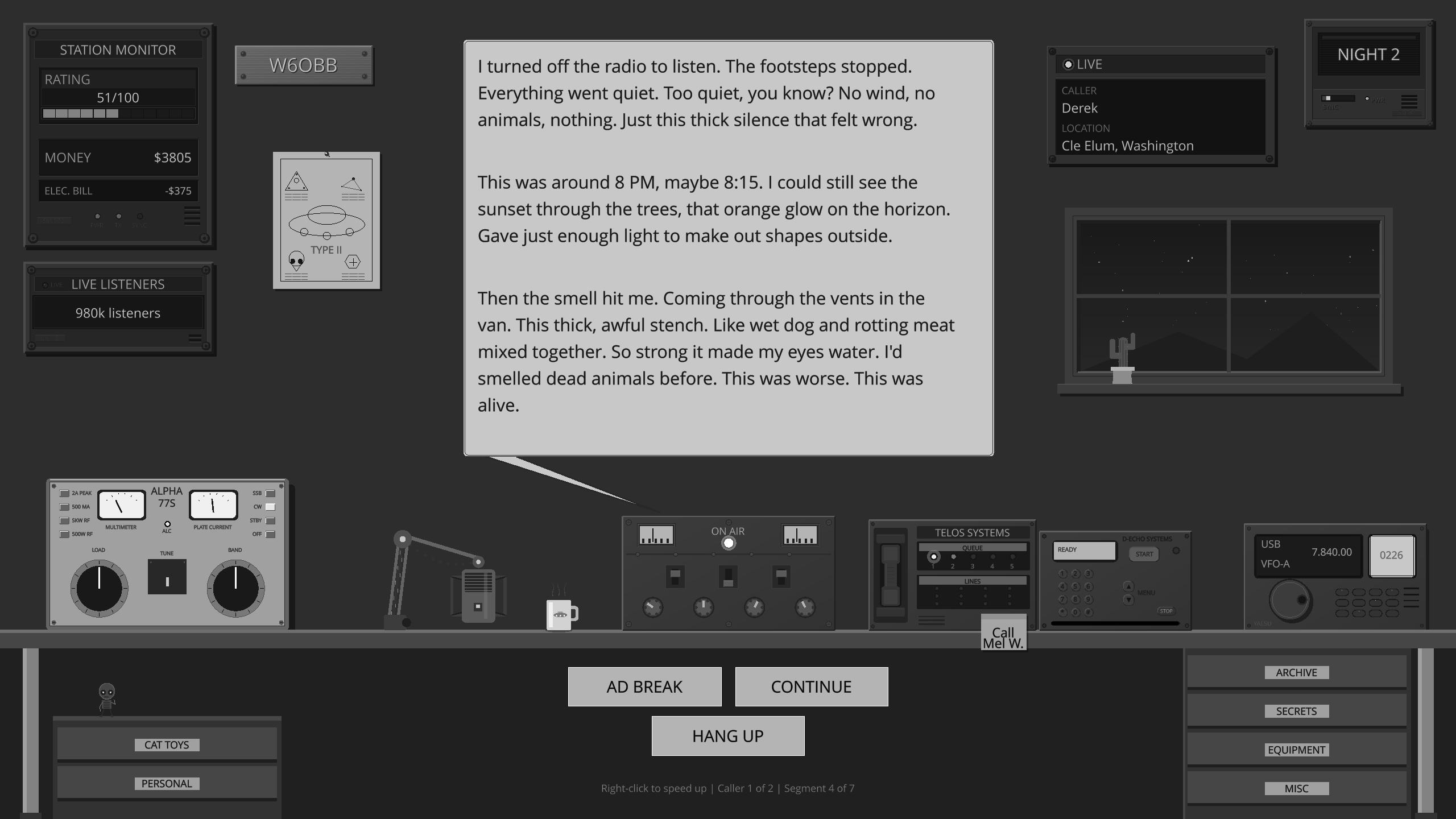
Ever wanted to host your own late-night paranormal radio show?
Across the Airwaves
You're on the air. Callers bring Mothman, Fresno Nightcrawlers, UFO sightings, reptilian autopsies, and whispers about AATIP and Project Blue Book. Every reply shapes how the night goes.

AI-Generated Summary
A civilian reported a stationary, cylindrical object near Columbus, Mississippi, on 23 June 1966, which was also tracked briefly by radar. The Air Force concluded the radar return was likely a false target caused by a temperature inversion.
This document contains a Project 10073 record regarding a UFO sighting reported on 23 June 1966 near Columbus, Mississippi. The witness, a 33-year-old production manager for the General Tire and Rubber Company, reported observing a stationary, cylindrical object for approximately 51 minutes. The object was described as being one foot in diameter and two feet long, green in color, with a red light on top that appeared to rotate and disappear at regular intervals. The object was also tracked by Columbus RAPCON radar at 40,000 feet and 25 nautical miles for four minutes before fading from view. Other radar units in the area failed to detect the object. The Air Force evaluation, signed by Colonel Jerome J. Jones of the Foreign Technology Division, concluded that the radar data was insufficient for a meaningful analysis. The report suggests that the radar return was likely a false target caused by a temperature inversion at approximately 43,000 feet, noting that while a weather balloon could remain stationary under the reported conditions, it would not explain the visual sighting of a lit object. The investigation remained inconclusive due to a lack of additional information and the failure of the witness to provide a requested personal account of the visual sighting.
Of the two possibilities, the false target seems more feasible, since presumably the balloon would be tracked before and after the period of observation.
PDF not loading? Download the PDF directly
Official Assessment
A false target seems more feasible, since presumably the balloon would be tracked before and after the period of observation.
The radar data was insufficient to support a meaningful analysis. The object was likely a false radar target caused by weather conditions, specifically a temperature inversion at 43,000 feet.
Witnesses
- [illegible]CivilianGeneral Tire and Rubber Co
Key Persons
- Harris, Sr.SAC Controller