Declassified UFO / UAP Document
Project 10073 Record: Analysis of Suspected Rock Sample
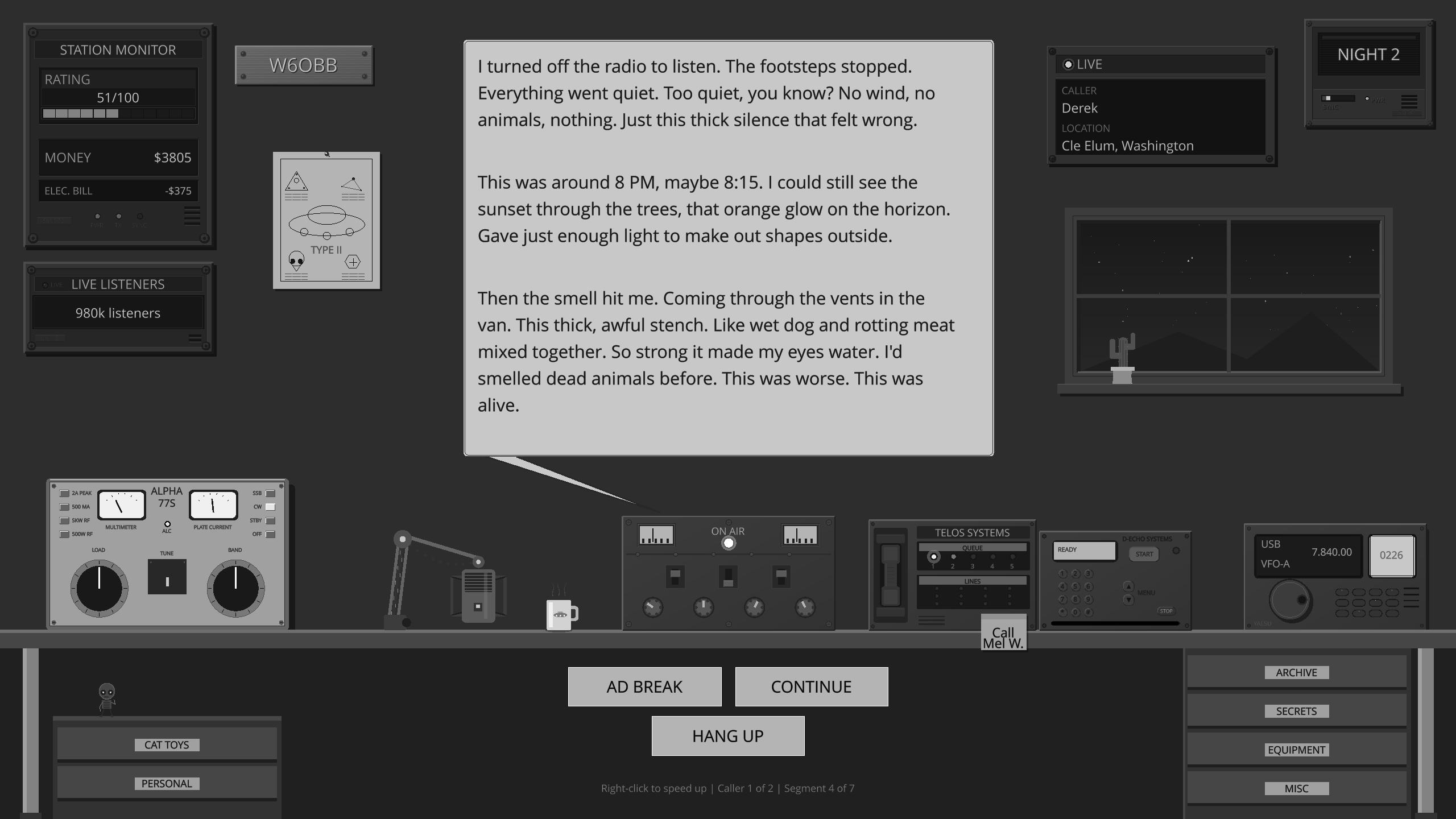
Ever wanted to host your own late-night paranormal radio show?
Across the Airwaves
You're on the air. Callers bring Mothman, Fresno Nightcrawlers, UFO sightings, reptilian autopsies, and whispers about AATIP and Project Blue Book. Every reply shapes how the night goes.

AI-Generated Summary
A civilian-submitted rock sample, suspected to be of UAP origin, was analyzed by the Air Force Materials Laboratory. Scientific testing determined the object was a common inorganic silicate rock found in the Southwestern United States.
This document details the administrative and scientific handling of a physical specimen submitted to the Air Force as a suspected Unidentified Aerial Phenomenon (UAP) object. On 16 July 1964, Major William R. Conner of the Air Force Special Weapons Center at Kirtland Air Force Base, New Mexico, forwarded a rock sample to the Foreign Technology Division (FTD) at Wright-Patterson Air Force Base. The sample had been discovered by a civilian and brought to the Kirtland office with the belief that it originated from a U.F.O. The submission was processed in accordance with AFR 200-2, paragraph 18 b. Upon receipt, the Aeronautical Systems Division's Materials Physics Division assigned the sample Analytical Branch No. 4-1241. A formal evaluation report, dated 30 July 1964, was prepared by 2/Lt Paul M. Maslona and reviewed by Captain D. S. Morrisey. The laboratory conducted emission spectroscopy, X-ray diffraction, and infrared spectroscopy on the sample. The results of the emission spectroscopy identified various elements including silicon, magnesium, aluminum, iron, sodium, zinc, titanium, potassium, and calcium. X-ray diffraction patterns indicated the presence of SiO2, noting that the sample was mostly amorphous and resembled pumice. Infrared spectroscopy confirmed the lack of any organic material, leading to the conclusion that the sample was a form of inorganic silicate. The final report concluded that the object was a silicate rock common to the Southwestern United States. On 6 August 1964, Colonel Eric T. Jonckheere of the Air Force Special Weapons Center was notified of these findings, with a recommendation that the civilian who submitted the sample be informed of the results.
Physical analysis indicated that the object was silicate rock common to the SW United States.
PDF not loading? Download the PDF directly
Official Assessment
Physical analysis indicated that the object was silicate rock common to the SW United States.
Emission spectroscopy, X-ray diffraction, and infrared spectroscopy confirmed the sample was a form of inorganic silicate, with no organic material present.
Witnesses
- [illegible]Civilian
Key Persons
- William R. ConnerMajor, USAF, Director, Safety & Security, Air Force Special Weapons Center
- QuintrenillaMajor, USAF
- Paul M. Maslona2/Lt, USAF, Project Engineer
- D. S. MorriseyCapt, USAF, Asst Chief, Analytical Branch
- Eric T. JonckheereColonel, USAF, Deputy for Technology and Subsystems