Declassified UFO / UAP Document
Project 10073 Record Card: Sighting of 25 June 1961
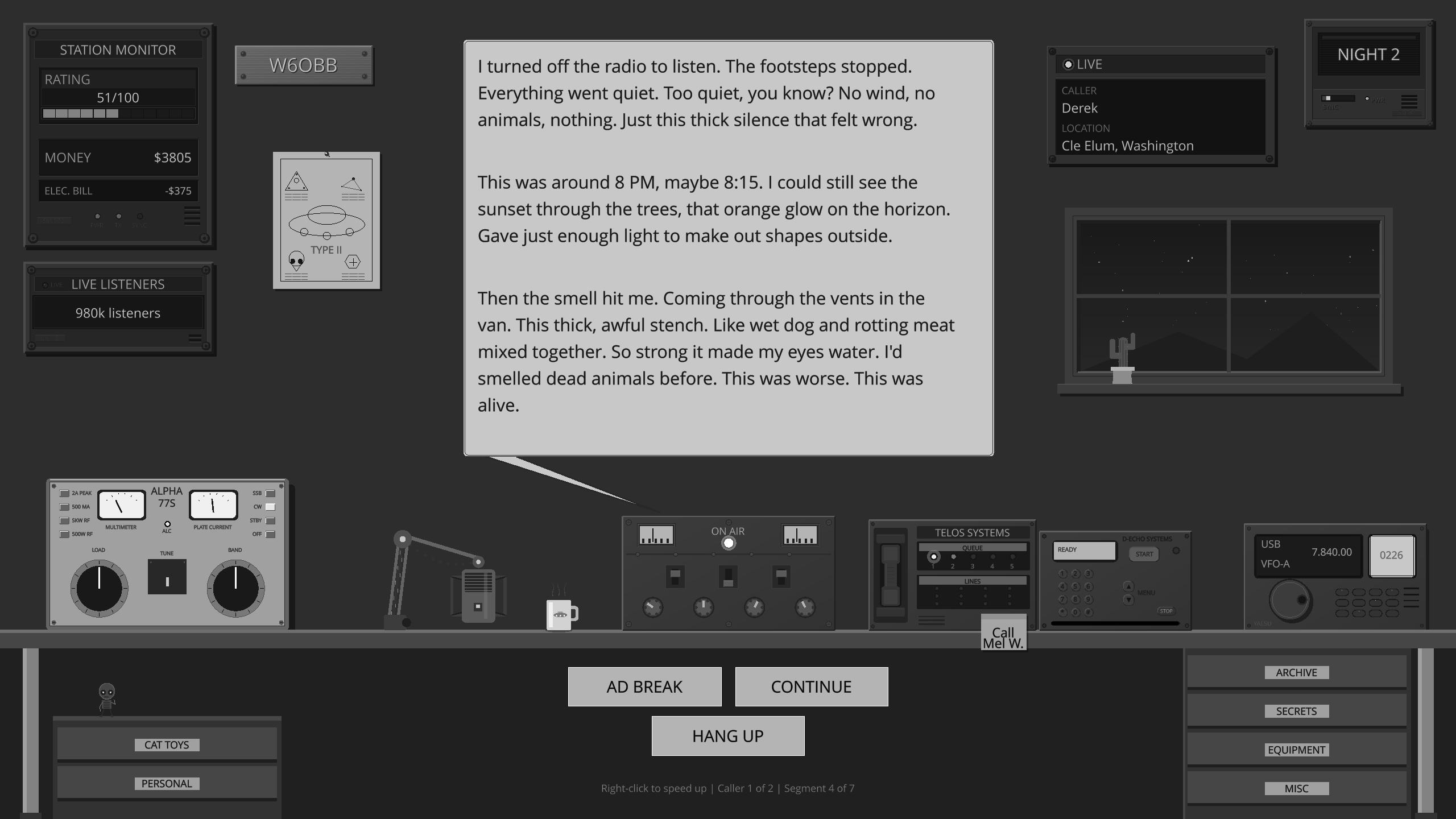
Ever wanted to host your own late-night paranormal radio show?
Across the Airwaves
You're on the air. Callers bring Mothman, Fresno Nightcrawlers, UFO sightings, reptilian autopsies, and whispers about AATIP and Project Blue Book. Every reply shapes how the night goes.

AI-Generated Summary
On June 25, 1961, an RC-121D aircraft crew reported a high-speed radar target off the U.S. Pacific Coast. Intelligence analysts later concluded the targets were likely 'Tropospheric Blobs' due to insufficient data for a positive identification.
This document collection details a radar sighting incident that occurred on June 25, 1961, off the United States Pacific Coast. The incident involved an RC-121D aircraft, call sign Ethan 20, from the 552 AEW&C Wing. At 0555 Zulu, the crew, including Captain J.J. Valovich, Lieutenant Guzman, Lieutenant Holmes, and SSGT Hargrove, reported a radar sighting of two unidentified vessels. The primary object was described as having an estimated speed of 4800 knots, with an unknown size and altitude. The object's flight path was characterized as a 'ragged arc' heading generally north to south, bowing westward approximately 50 miles off a straight course. The total duration of the observation was three minutes, and the track faded after approximately 150 miles.
The report was processed through official channels, including the Aerospace Technical Intelligence Center (ATIC) and the Foreign Technology Division (FTD). Intelligence Officer 2/Lt Richard A. Kahane submitted the initial report, noting that the sighting was classified to prevent disclosure of AEW radar capabilities. Subsequent internal correspondence between Colonel Edward H. Wynn and the Foreign Technology Division highlights the difficulty in evaluating the event. Colonel Paul J. Slocum of the FTD noted that the information provided was too limited for a definitive evaluation. However, a follow-up message (520IN 1227) suggested that the 'skunks' (radar targets) were likely 'Tropospheric Blobs,' citing the presence of three separate air masses at the 700 millibar level as indicated by weather synoptic charts. The documentation includes a track overlay (Station #5) and notes that scope photography was held by the intelligence section for two weeks. The final assessment remained inconclusive, emphasizing the lack of sufficient data to provide a positive identification of the radar targets.
Based on the limited information in Attachments 2 and 3, it is virtually impossible to make any positive evaluation from a radar point of view.
PDF not loading? Download the PDF directly
Official Assessment
Possibility of Tropospheric Blobs exists due to presence of three separate air masses at 700 millibar level during period of sighting.
The Foreign Technology Division concluded that based on limited information, it was virtually impossible to make a positive evaluation from a radar point of view, though the evaluation of 'Tropospheric Blobs' was considered the most likely.
Witnesses
Key Persons
- Edward H. WynnColonel, USAF, Deputy for Science and Components
- Paul J. SlocumColonel, USAF, Chief, Electronics Division