Declassified UFO / UAP Document
Project 10073 Record Card: Sighting near Russell and Salina, Kansas, 27 Jan 61
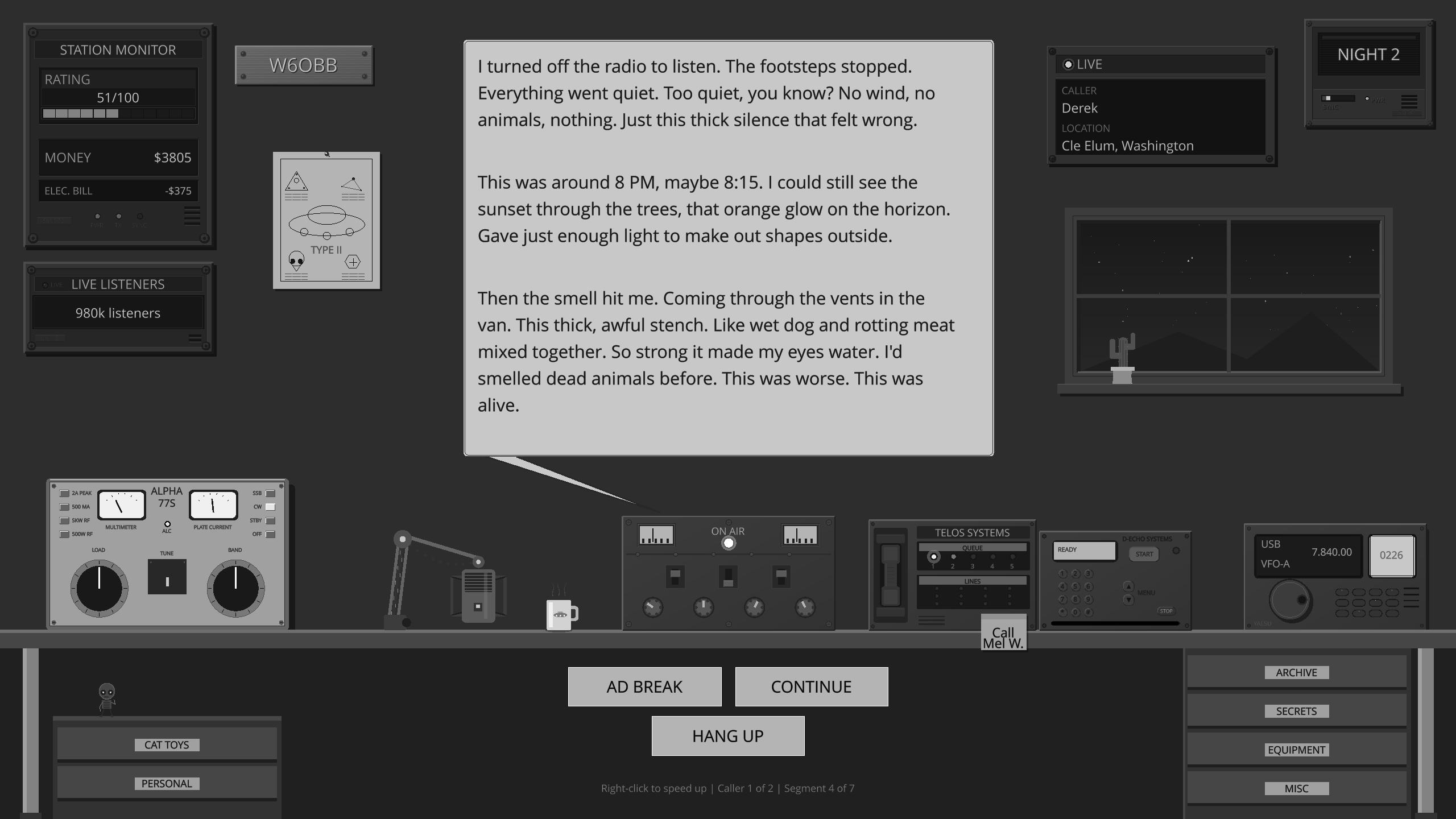
Ever wanted to host your own late-night paranormal radio show?
Across the Airwaves
You're on the air. Callers bring Mothman, Fresno Nightcrawlers, UFO sightings, reptilian autopsies, and whispers about AATIP and Project Blue Book. Every reply shapes how the night goes.

AI-Generated Summary
A green, round object was observed descending over Kansas on January 27, 1961, accompanied by an explosion. The Air Force concluded the object was a rare bolide meteor.
On January 27, 1961, at 23:34 local time, a sighting of an unidentified aerial phenomenon occurred in Kansas, specifically 10 miles southwest of Russell. The object was described by witnesses as a large, round, green ball that appeared in the southwest and descended in a straight path. The observation lasted approximately 15 seconds. Witnesses, including a Major from the 488th Bomb Wing and local farmers, reported hearing an explosion associated with the object. The 793rd ACW Squadron at Hutchinson AFS filed a report on the incident, noting that the witnesses were separated by approximately 70 nautical miles but observed the object simultaneously, suggesting it was at a very high altitude. The official conclusion reached by the Air Technical Intelligence Center was that the object was a meteor, specifically a bolide. The report notes that such meteors are known to enter the Earth's atmosphere and occasionally explode with enough intensity to be heard for miles, which is consistent with the witnesses' reports of an explosion. The incident was documented on a Project 10073 record card and included a teletype report from the 793rd ACW Squadron to various Air Force commands, including the Air Technical Intelligence Center at Wright-Patterson AFB.
The explosion is so intense that it can be heard for miles. These types of meteors are fairly rare; and when they are seen and heard, startle average observer.
PDF not loading? Download the PDF directly
Official Assessment
Description and duration is characteristic of a meteor. Witnesses reported hearing an explosion. Some meteors called bolides enter the earths atmosphere, almost reach the earths surface and explode. The explosion is so intense that it can be heard for miles. These types of meteors are fairly rare; and when they are seen and heard, startle average observer.
The object was identified as a meteor (bolide) based on its appearance, trajectory, and the associated explosion heard by witnesses.
Witnesses
- [illegible]Maj.488th Bomb Wing
- [illegible]
- [illegible]
Key Persons
- Powell (NMI) MooreDuty Director