Declassified UFO / UAP Document
Project 10073 Record Card: Sighting NNW of Lebreville, Africa
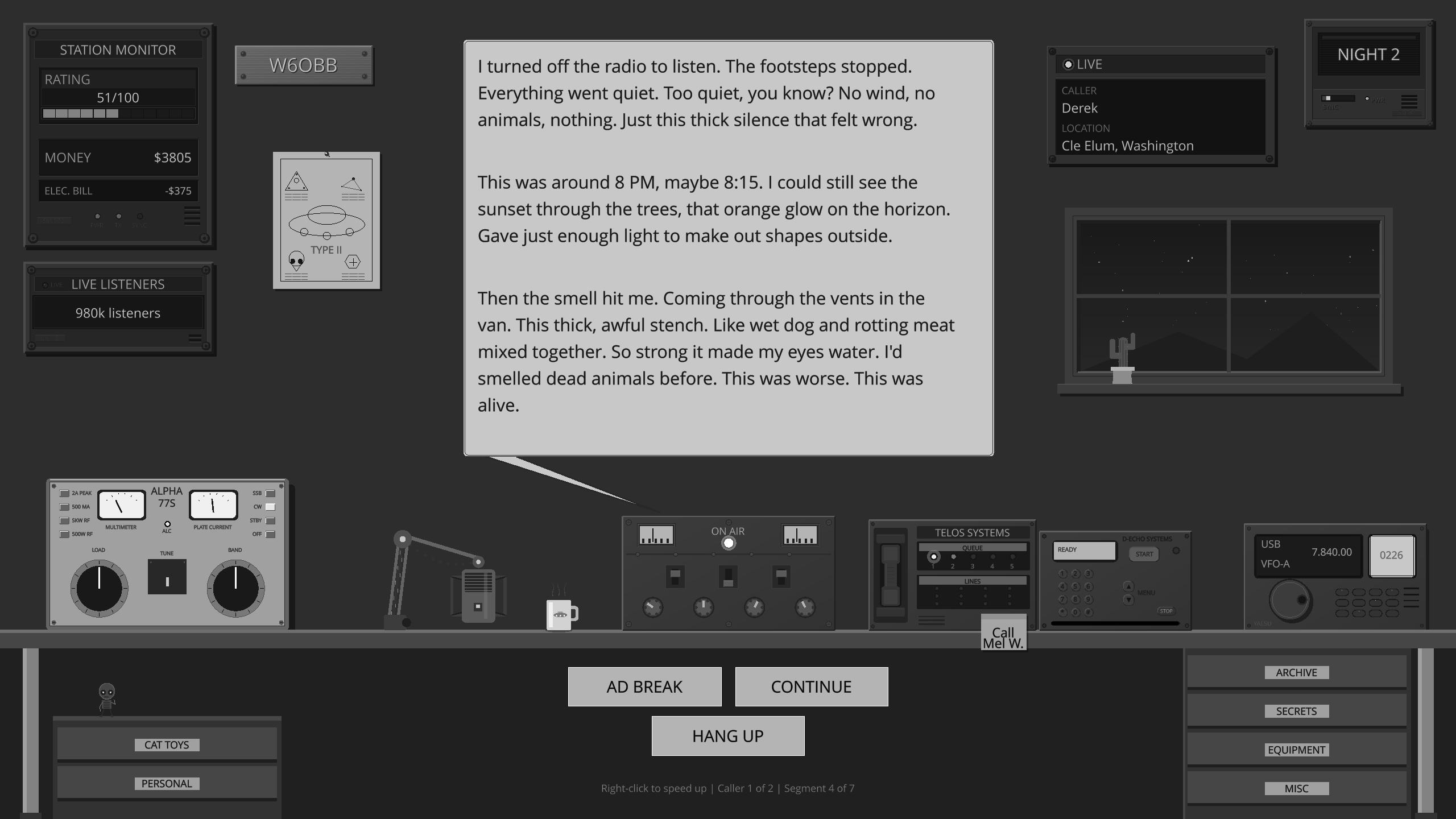
Ever wanted to host your own late-night paranormal radio show?
Across the Airwaves
You're on the air. Callers bring Mothman, Fresno Nightcrawlers, UFO sightings, reptilian autopsies, and whispers about AATIP and Project Blue Book. Every reply shapes how the night goes.

AI-Generated Summary
USAF aircrew observed a round, orange object that exploded into a trail and cloud over West Africa. While the pilot suggested a missile, the official ATIC evaluation concluded it was a bolide meteor.
On August 22, 1960, at 1751Z, the crew of a C-124 aircraft (AF 17276) observed an unidentified aerial phenomenon while flying at 10,500 feet, located 85 nautical miles east-southeast of Principe Islands, off the coast of West Africa. The aircraft commander, Major Warren L. Carruthers, and 1/Lt James J. Wood reported seeing a round, orange object, approximately the size of a volleyball at arm's length. The object was first observed at a 12 o'clock position with 80 degrees elevation and moved in a southerly direction. After four seconds of observation, the object exploded in a brilliant flash at an estimated altitude of 20,000 to 30,000 feet. The explosion produced a bluish-green trail in an arc of approximately 20 degrees, which lasted for two seconds before transforming into a whitish-grey cloud. This cloud remained visible for nine minutes and was observed dissipating in the winds aloft. The crew reported no sound from the cockpit. The sighting was reported to Congo Airways and later to Sidi Airways. The aircraft commander, who possessed 11,000 flying hours, explicitly stated his belief that the object was not a meteor, comparing its appearance to the Soviet Sputnik. He suggested it might have been a missile off-course from a French missile range in North Africa. However, the official Air Technical Intelligence Center (ATIC) analysis concluded that the object was likely a meteor, specifically a 'bolide.' The analysis noted that the apparent size, shape, and speed ruled out a missile, and that the description was consistent with a meteor entering the atmosphere during daylight hours, where the burning substance creates a trail and cloud not typically seen at night.
Witnesses probably saw a type of meteor called a "bolide."
PDF not loading? Download the PDF directly
Official Assessment
Witnesses probably saw a type of meteor called a "bolide."
The object was determined to be a meteor, despite the aircraft commander's initial comparison to a Soviet Sputnik-like object. The report notes the possibility of a missile off-course from a French range, but concludes it was a bolide.
Witnesses
- Warren L. CarruthersMAJUSAF
- James J. Wood1/LTUSAF
Key Persons
- Warren L. CarruthersAircraft Commander