Declassified UFO / UAP Document
Project 10073 Record Card and Evaluation Report: Syracuse, New York Sighting
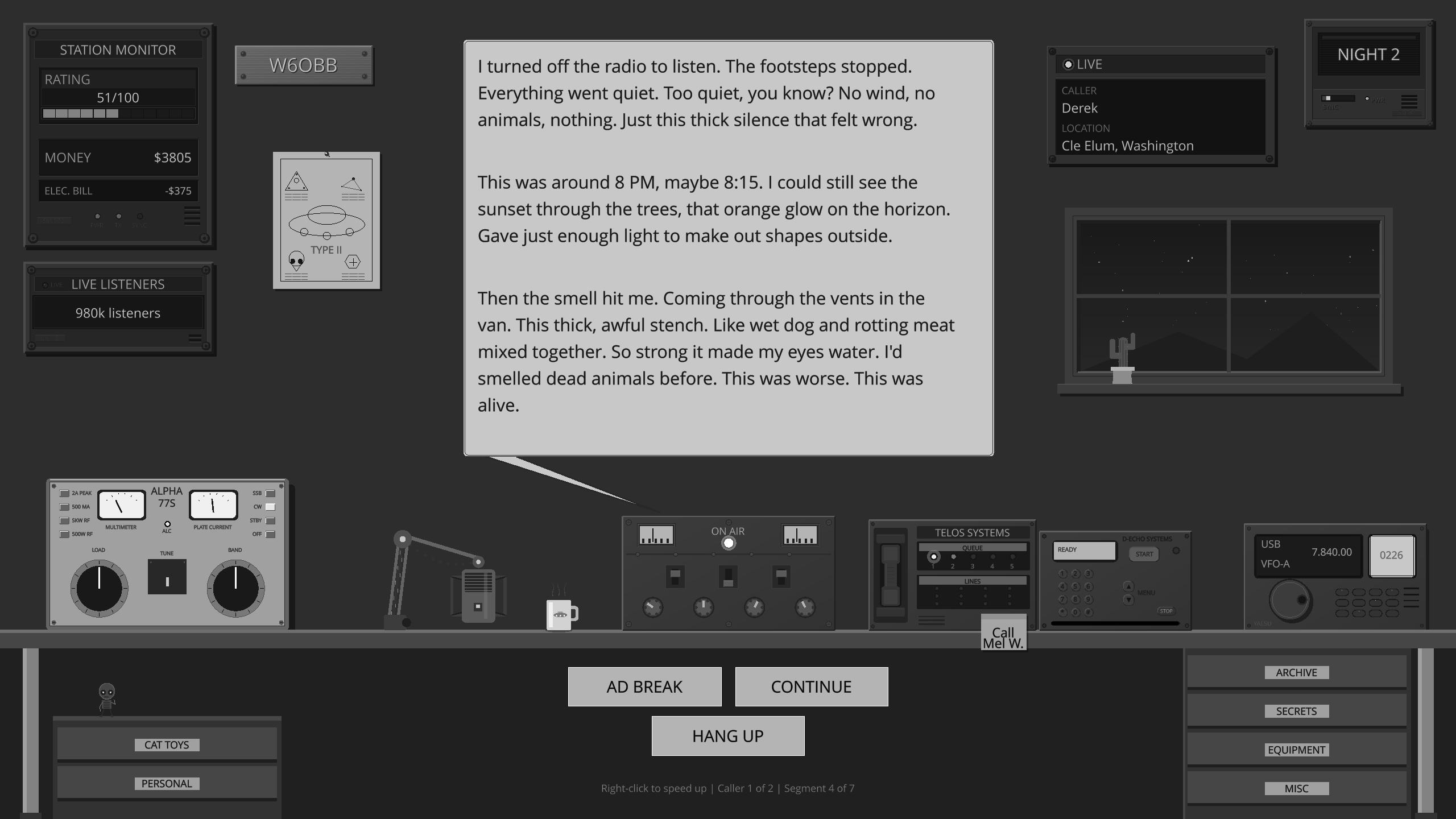
Ever wanted to host your own late-night paranormal radio show?
Across the Airwaves
You're on the air. Callers bring Mothman, Fresno Nightcrawlers, UFO sightings, reptilian autopsies, and whispers about AATIP and Project Blue Book. Every reply shapes how the night goes.

AI-Generated Summary
Two pieces of molten material fell in Syracuse, New York, on June 25, 1960, and were initially suspected to be space debris. Laboratory analysis by the Wright Air Development Center identified the material as glass furnace slag.
On June 25, 1960, at approximately 1530 hours local time, two pieces of molten, unidentified material fell at a private residence in Syracuse, New York. One of the objects reportedly struck the boot of a small child. The objects were recovered and delivered to personnel at Hancock Field. The smaller object was described as being roughly the size of a lemon and appearing metallic, while the second object measured approximately 6 inches by 4 inches by 2 inches. Both items were noted for their light density and signs of exposure to extreme heat. Base personnel initially tested the items and determined they were not radioactive and were too light to be meteorites. The material was subsequently forwarded to the Aerospace Technical Intelligence Center (ATIC) and then to the Wright Air Development Center (WADC) for formal analysis. The 26th Air Division (SAGE) noted that the incident coincided with the re-entry and disintegration of the Sputnik IV carrier vehicle, prompting an investigation into whether the debris originated from that source. The Materials Central Physics Laboratory conducted an evaluation, assigning the samples Physics Laboratory numbers 6177 and 6178. Using emission spectroscopy, infrared analysis, and X-ray diffraction, the laboratory determined that both samples shared the same chemical composition. The analysis revealed a composition primarily of calcium, with major components including silicon, magnesium, manganese, aluminum, iron, titanium, and chromium. The infrared spectra showed no significant absorption bands, and X-ray diffraction indicated a non-crystalline structure. The final conclusion of the evaluation report, dated November 7, 1960, was that the material was glass furnace slag. The documentation includes various internal military messages and suborders tracking the transfer of the samples between agencies, including requests for cost estimates for further microstructural analysis, which were ultimately deemed unnecessary as the material was identified as slag. The case was closed with the determination that the objects were not of extraterrestrial or space-vehicle origin.
X-ray diffraction analysis indicated that the material is non-crystalline in structure and appears to be glass furnace slag.
PDF not loading? Download the PDF directly
Official Assessment
Material believed to be glass furnace slag.
Emission spectroscopy, infrared, and X-ray diffraction analysis determined the material was non-crystalline and composed primarily of calcium, with silicon, magnesium, manganese, aluminum, iron, titanium, and chromium as major components.
Witnesses
- [illegible]Civilian
Key Persons
- James O. BolieuInitiator
- Solomon F. BrokeshoulderChief, Organic Analysis Section, Physics Laboratory
- William L. Van MeterLt Colonel, USAF
- Philip G. EvansColonel, USAF
- Howard C. CrossPWS
- C. A. NauglePWS