Declassified UFO / UAP Document
UFO's 1960: A written version of the talk presented to the Hypervelocity Impact Conference, Eglin Air Force Base, April 27, 1960
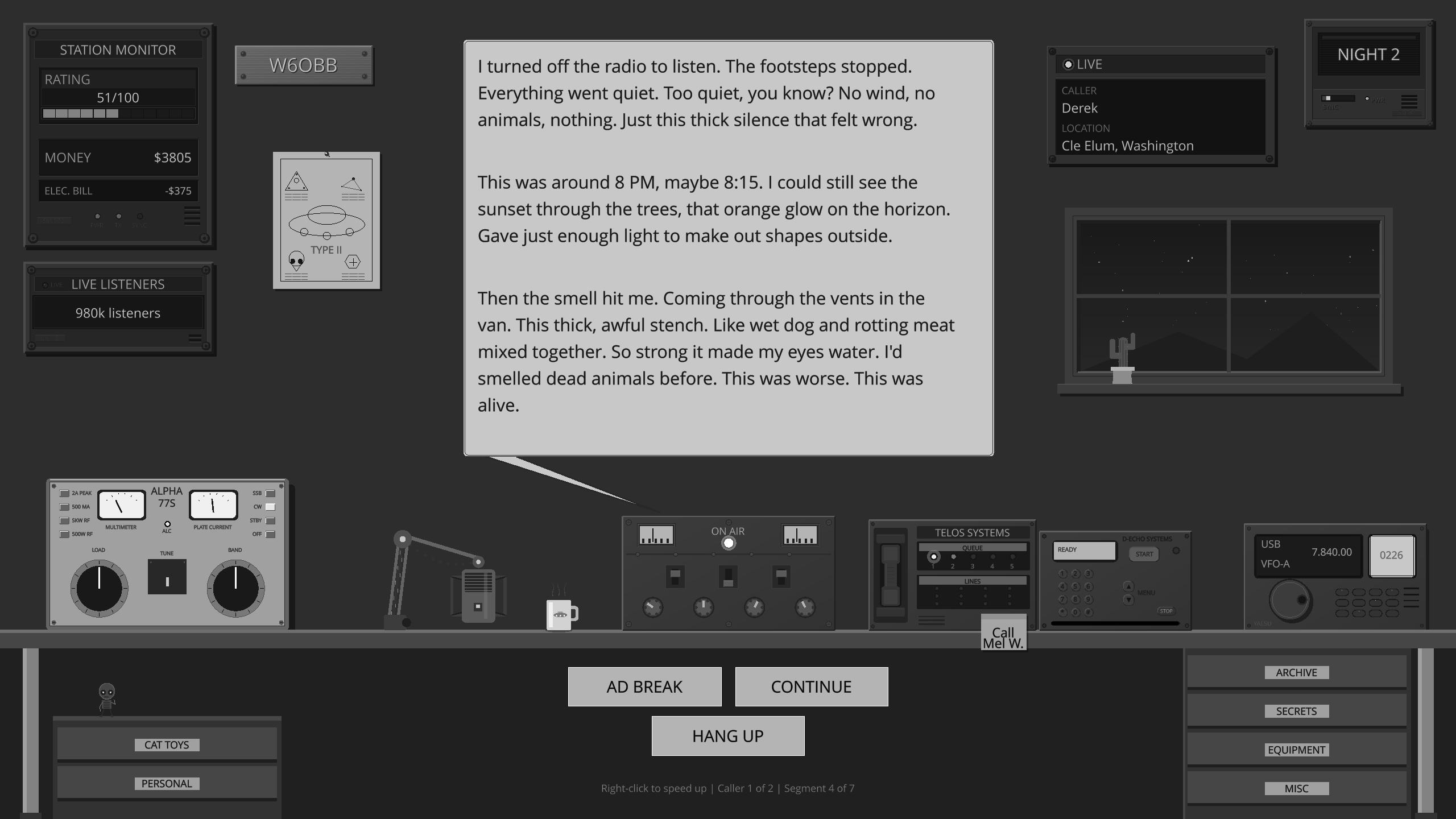
Ever wanted to host your own late-night paranormal radio show?
Across the Airwaves
You're on the air. Callers bring Mothman, Fresno Nightcrawlers, UFO sightings, reptilian autopsies, and whispers about AATIP and Project Blue Book. Every reply shapes how the night goes.

AI-Generated Summary
Dr. Hynek presents a briefing on UFO reports, arguing that while most are misidentifications, a small percentage of unexplained cases warrant serious, multidisciplinary scientific investigation. He emphasizes the need to study the 'report generation' process rather than just the objects themselves.
This document is a transcript of a briefing delivered by Dr. Hynek at the Hypervelocity Impact Conference at Eglin Air Force Base on April 27, 1960. Dr. Hynek, an astronomer, addresses the audience on the subject of Unidentified Flying Objects (UFOs). He clarifies that while he has never personally witnessed a UFO, he has extensive experience analyzing the reports of others. He defines a 'Flying Saucer' as any aerial sighting or phenomenon that remains unexplained long enough for someone to write a report about it. The briefing provides a detailed overview of various UFO sighting waves, with a particular focus on a series of reports from France in 1954, which were investigated by Aime Michel. Dr. Hynek discusses the patterns observed in these reports, including the 'straight-line' phenomenon identified by Michel. He also recounts several other notable cases, such as the 1897 airship sighting by Alexander Hamilton in Kansas, the 1957 Levelland, Texas, sightings, and a 1960 sighting in Lacamp, Louisiana. Throughout the briefing, Dr. Hynek maintains a skeptical but open-minded scientific perspective. He acknowledges that the vast majority of reports are misidentifications of natural phenomena like meteors, balloons, or planets, or are the result of human error, superstition, or wishful thinking. However, he argues that a small percentage of reports resist conventional explanation and that the scientific community has largely failed to address these cases properly. He criticizes the 'hard-headed' nature of scientific committees that dismiss reports to protect their reputations. Dr. Hynek proposes that a panel consisting of scientists, psychologists, psychiatrists, lawyers, and educators should be formed to study these unexplained reports without the stigma of ridicule. He emphasizes that the goal should not be to study 'flying saucers' as a singular phenomenon, but to understand the mechanisms of report generation, which he believes could yield valuable data in psychology, public relations, and atmospheric physics. He concludes by noting that the Air Force's interest in UFOs is primarily driven by national security concerns regarding potential hostility, but he advocates for a more rigorous, objective, and multidisciplinary approach to the problem.
A Flying Saucer is any aerial sighting or phenomenon that remains unexplained long enough for someone to write a report about it.
PDF not loading? Download the PDF directly
Official Assessment
The author argues that while most UFO reports are misidentifications of natural phenomena, a small percentage remain unexplained and warrant serious, multidisciplinary scientific study rather than dismissal.
Key Persons
- Aime MichelInvestigator and author
- Kenneth ArnoldReporter of the first real newspaper case in the U.S.
- Charles MooreBalloonist
- Alexander HamiltonWitness of 1897 airship sighting