Declassified UFO / UAP Document
Project 10073 Record Card and Related Correspondence — Alexandria, Louisiana, February 1960
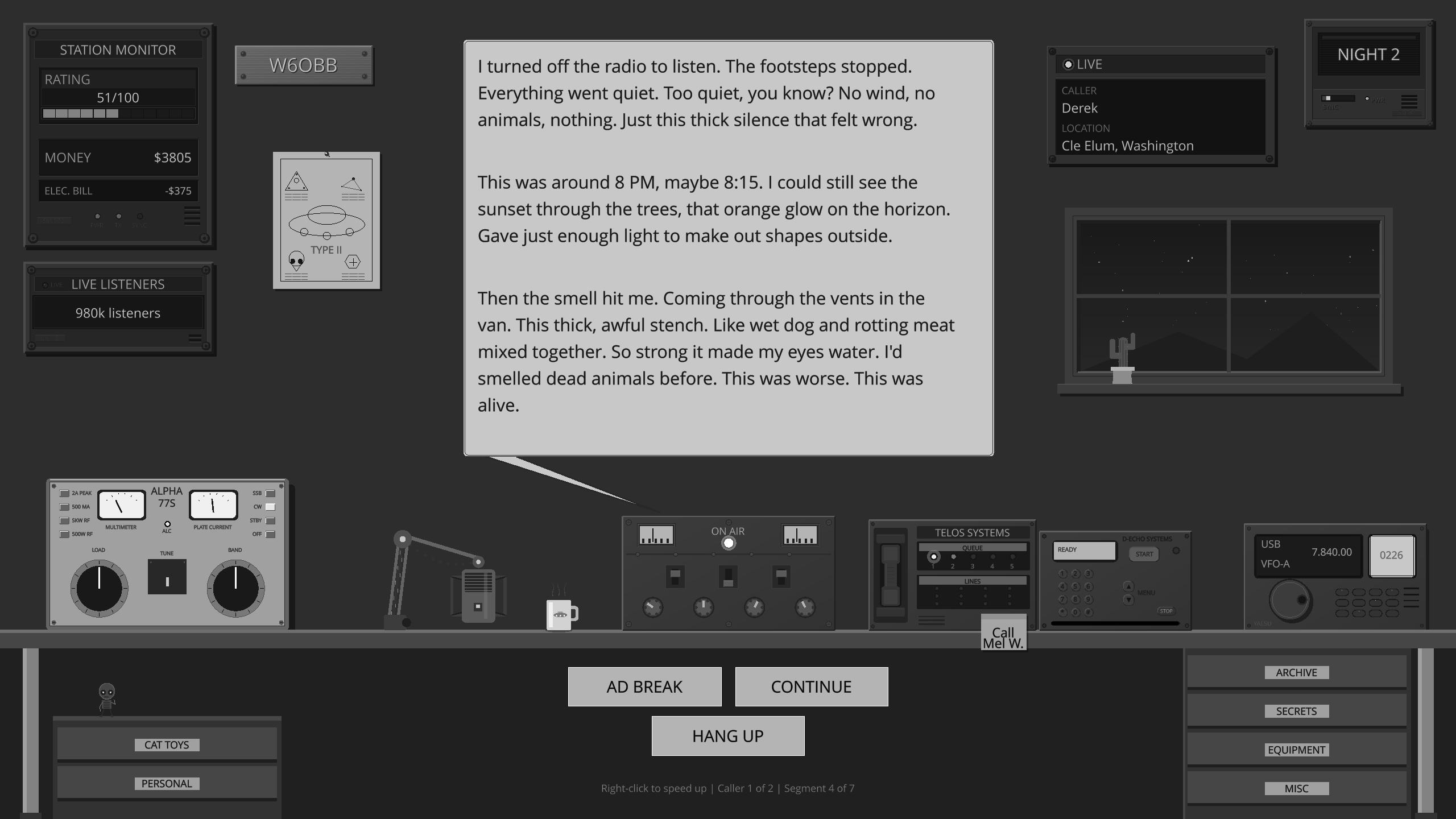
Ever wanted to host your own late-night paranormal radio show?
Across the Airwaves
You're on the air. Callers bring Mothman, Fresno Nightcrawlers, UFO sightings, reptilian autopsies, and whispers about AATIP and Project Blue Book. Every reply shapes how the night goes.

AI-Generated Summary
A UFO sighting reported by M/Sgt Richard L. Callen in February 1960 was investigated by the Air Technical Intelligence Center. The investigation concluded the object was the star Spica, and the submitted film footage showed only internal reflections rather than an aerial object.
This document collection details the investigation of a UFO sighting reported by M/Sgt Richard L. Callen on February 23, 1960, near Alexandria, Louisiana. M/Sgt Callen, an experienced radio operations supervisor, observed a round, disc-like object that changed to a pear shape and displayed flickering red, blue, and green lights. The object was observed for approximately three and a half hours, during which it appeared to climb and maintain a relative position to a faint, distant star. Callen captured the sighting on 8mm Kodachrome color film. The report was submitted to the Air Technical Intelligence Center (ATIC) for evaluation.
Following the initial report, the 401st Tactical Fighter Wing provided supplemental information, including camera specifications (a De Jur, Eldorado II, 8mm camera) and the observer's location. The ATIC photoanalysis section reviewed the film but reported that they could not find any evidence of the object described by the witness. Instead, they suggested that the footage taken inside a barracks-type building showed only reflections from items such as lieutenant bars, windows, and desk objects, with circular red and yellow halations caused by a ceiling light bulb mirroring on the camera lens.
Subsequent analysis by intelligence officers, including Captain Aloysius A. Caffrey and Captain Bernard A. Campbell, concluded that the observations were likely the result of astronomical phenomena. Specifically, the investigators determined that the object was the star 'Spica'. They noted that the star was in the reported location at the time of the sighting and that the object maintained its position relative to other stars throughout the duration of the observation. The military investigation concluded that the sighting was not an unidentified aerial phenomenon but rather a misidentification of a celestial body, and the film provided no corroborating evidence of an anomalous object.
The description and motion of this object leads us to conclude that this object was probably the star 'Spica'.
PDF not loading? Download the PDF directly
Official Assessment
The object was probably the star 'Spica'.
The object was determined to be the star Spica based on its position and the fact that it maintained its relative position to other stars throughout the observation period. Film analysis by the ATIC photoanalysis section failed to show anything unusual, attributing light patterns to reflections from items like lieutenant bars and desk objects.
Witnesses
- Richard L. CallenM/Sgt401st Operations Squadron, England AFB, LA
- Bernard A. CampbellCaptain613th TFS, England AFB, Louisiana
Key Persons
- Wilber Price, Jr.Chief, AFCIN-4D4
- Ray F. GrodhausMajor, USAF, Wing Intelligence Officer
- Philip G. EvansColonel, USAF, Deputy for Sciences and Components