Declassified UFO / UAP Document
Unidentified flying object; report of sighting at 110438Z JAN 60
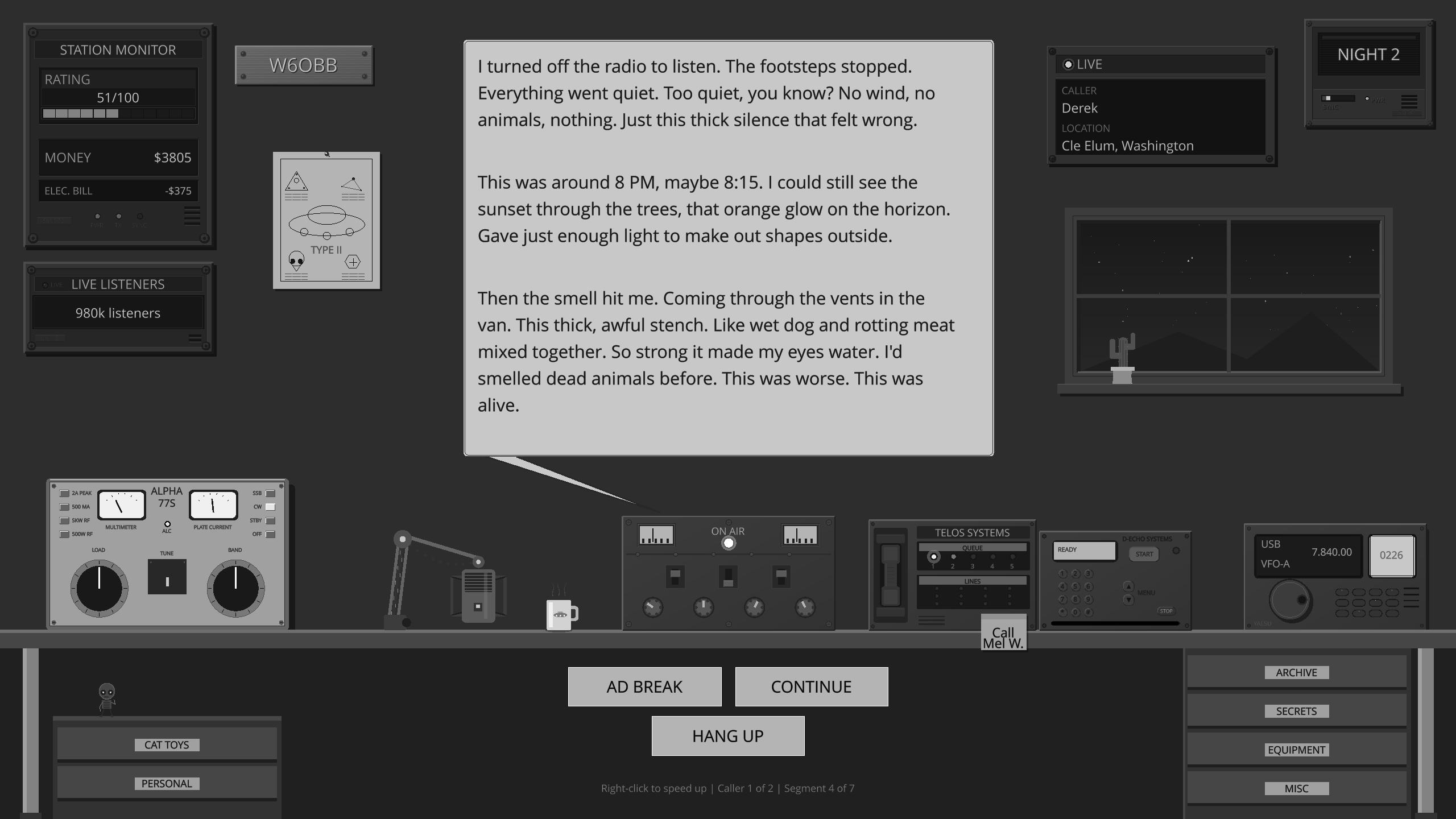
Ever wanted to host your own late-night paranormal radio show?
Across the Airwaves
You're on the air. Callers bring Mothman, Fresno Nightcrawlers, UFO sightings, reptilian autopsies, and whispers about AATIP and Project Blue Book. Every reply shapes how the night goes.

AI-Generated Summary
A Navy flight crew reported an unidentified aerial object over the Pacific in January 1960. The Air Technical Intelligence Center concluded the object was a meteor of the 'fireball' type.
On January 11, 1960, at 110438Z, the crew of a Navy R7V-1 aircraft (Bureau No. 44051) of VR-7, operating under the Military Air Transport Service, observed an unidentified flying object while in flight over the Pacific at coordinates 30-30N 139-05W. The aircraft was traveling at a course of 073 degrees true at 235 knots. The witnesses, Chief James A. HAUSER (copilot) and Ensign John S. STEWART (pilot), reported seeing a very bright white light with irregular edges, roughly round in shape and approximately half the size of a full moon. The object was observed for 10 to 15 seconds, appearing to move in a straight line before continuing on a slightly downward trajectory. Both witnesses noted the object was approximately 30 degrees higher than their aircraft. The aircraft's radar was not in operation at the time, precluding electronic confirmation. Weather conditions were described as clear with unlimited visibility, though the aircraft was flying above an overcast layer extending to 9,000 feet. Following the sighting, the crew arrived at U.S. Naval Air Station, Moffett Field, where they were interviewed by an agent of the District Intelligence Officer, Twelfth Naval District. Ensign STEWART noted that he had observed a similar, though larger and bluish-white, object on a previous flight from Travis to Hickham. The official conclusion reached by the Air Technical Intelligence Center (ATIC) was that the object was a slow meteor of the 'fireball' type. The report includes detailed meteorological data from the Fleet Weather Facility at Alameda, noting heavy cloud cover and the possibility of thunderstorms in the area at the time of the sighting.
Description conforms to that of a slow meteor of the 'Fireball' type.
PDF not loading? Download the PDF directly
Official Assessment
Description conforms to that of a slow meteor of the 'Fireball' type.
The object was identified as a meteor of the fireball class based on the description provided by the flight crew.
Witnesses
- James A. HAUSERATC, USNVR-7
- John S. STEWARTEnsign, USNVR-7
Key Persons
- John F. JACKSONEnlisted Personnel Officer for VR-7
- G. R. NELSONEnsign, Officer Personnel Officer for VR-7