Declassified UFO / UAP Document
Project 10073 Record Card and Related Correspondence Regarding Fireball Sightings
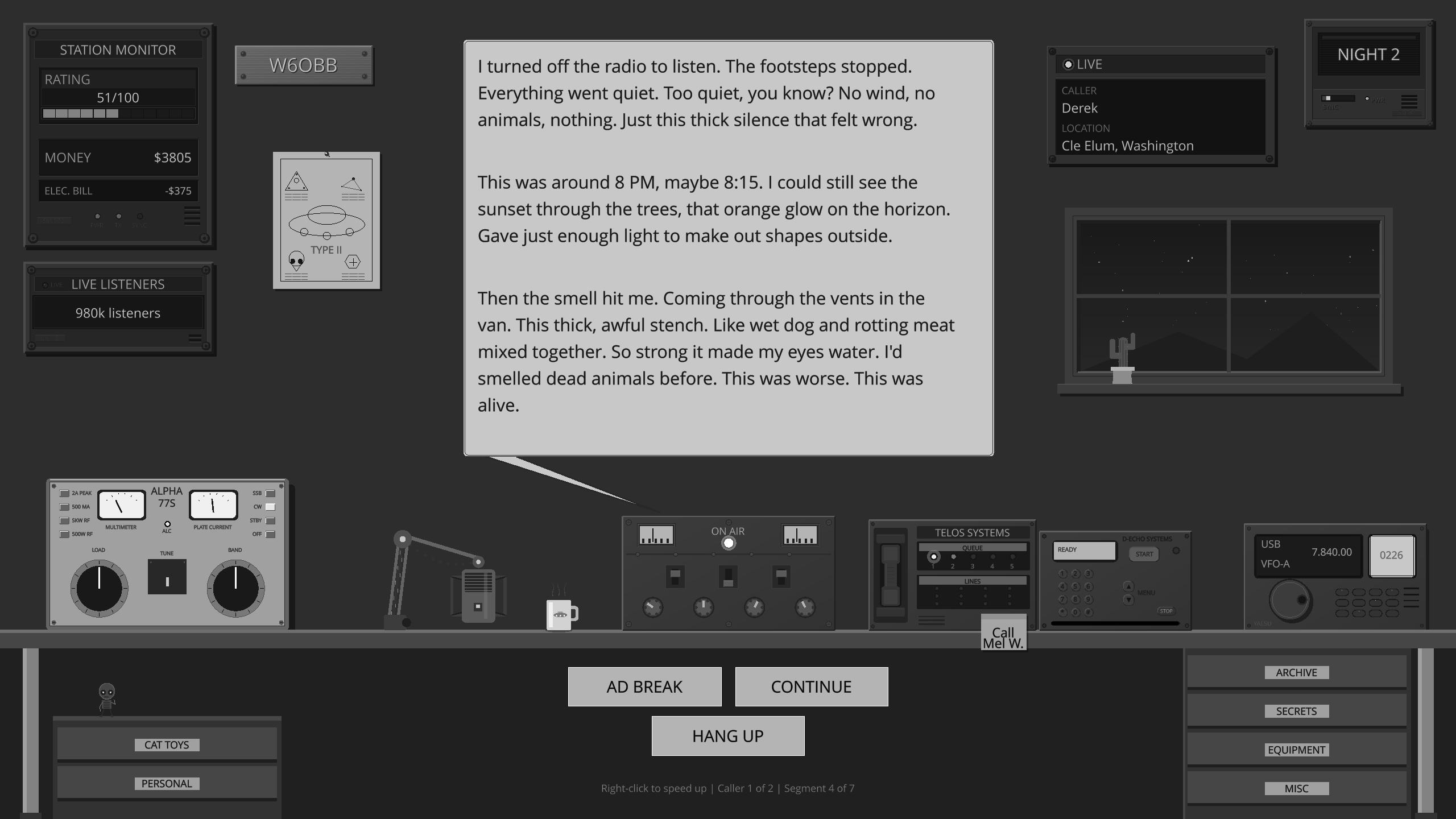
Ever wanted to host your own late-night paranormal radio show?
Across the Airwaves
You're on the air. Callers bring Mothman, Fresno Nightcrawlers, UFO sightings, reptilian autopsies, and whispers about AATIP and Project Blue Book. Every reply shapes how the night goes.

AI-Generated Summary
The document contains correspondence between the American Meteor Society and the U.S. Air Force regarding the investigation of fireball sightings. A specific report from February 1959 near Phillipsburg, PA, was officially identified as a parachute flare.
This document collection details the Air Force's investigation into a series of fireball and UAP sightings reported throughout 1958 and 1959. The primary correspondence involves a request from Dr. Charles P. Olivier, President of the American Meteor Society, to the Department of the Air Force, seeking data on specific fireball events to assist in scientific analysis of their atmospheric paths and orbits. In response, the Air Force, through Major L. J. Tacker of SAFIS-3, provided a summary of several reported sightings, including events in Georgia, New York, New Jersey, and South Carolina. A specific incident report from February 11, 1959, near Phillipsburg, Pennsylvania, is documented in detail. A civilian pilot reported a very bright, white, basketball-sized flash that fell straight down slowly. The Air Force investigation, coordinated through the 26th Air Division and the Air Technical Intelligence Center, concluded that the characteristics of this specific sighting were typical of a parachute flare. The file includes internal military communications, teletype messages, and the formal response to Dr. Olivier, illustrating the administrative process of gathering, verifying, and evaluating reports of aerial phenomena. The documents highlight the Air Force's reliance on weather station data and military operational logs to rule out conventional explanations, such as weather balloons or military exercises, before finalizing conclusions.
Characteristics reported are typical of a parachute flare.
PDF not loading? Download the PDF directly
Official Assessment
Characteristics reported are typical of a parachute flare.
The sighting was identified as a parachute flare.
Witnesses
- Civilian PilotCivilian Pilot
Key Persons
- Charles P. OlivierPresident, American Meteor Society
- L. J. TackerMajor, SAFIS-3