Declassified UFO / UAP Document
Unidentified Flying Object Sighting Report — Knoxville, Tennessee, 22 June 1958
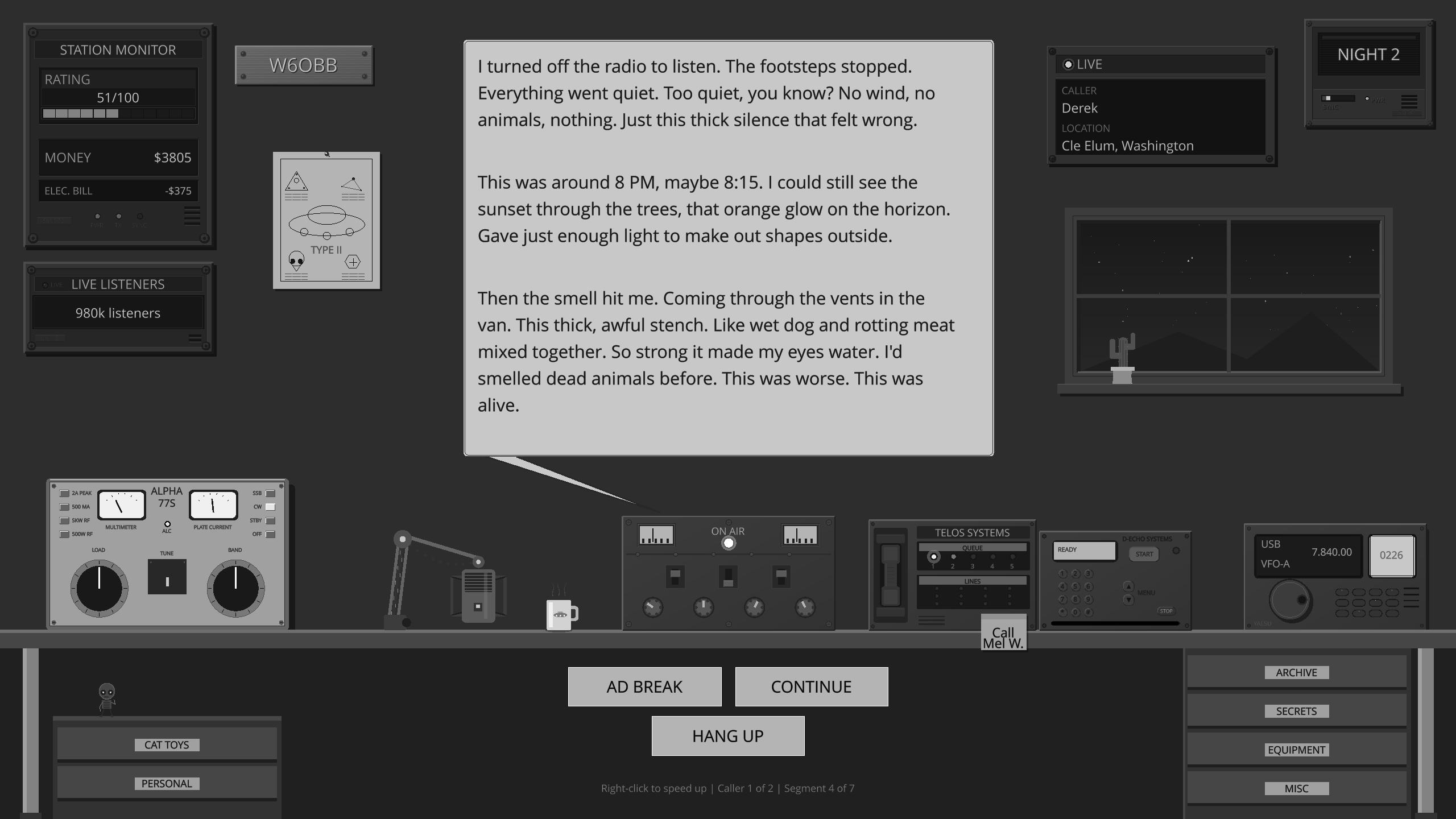
Ever wanted to host your own late-night paranormal radio show?
Across the Airwaves
You're on the air. Callers bring Mothman, Fresno Nightcrawlers, UFO sightings, reptilian autopsies, and whispers about AATIP and Project Blue Book. Every reply shapes how the night goes.

AI-Generated Summary
Major General Carl A. Brandt reported a brief, brilliant white object in the sky over Tennessee in 1958. ATIC concluded the sighting was likely a meteor, and the General requested no further investigation.
This document details an Unidentified Flying Object (UFO) sighting reported by Major General Carl A. Brandt on June 22, 1958, in the vicinity of Knoxville, Tennessee. The General, who was piloting a T-29 aircraft at 12,000 feet, observed a brilliant white object that appeared slightly smaller than a pencil. The object was described as having no discernible details, emitting no sound, and leaving no residual trail as it followed a straight, descending flight path. The sighting lasted approximately two to three seconds. The report was initially processed by the 314th Troop Carrier Wing and subsequently forwarded to the Air Technical Intelligence Center (ATIC) at Wright-Patterson Air Force Base. ATIC officials expressed concern regarding the non-conformity of the reporting procedures, noting that the incident was not reported via the electrical channels required by AFR 200-2 until July 12, 1958. Upon investigation, ATIC personnel conducted a cursory plot and analysis, suggesting that the object was likely a meteor or a daytime bolide. Alternative theories, such as the specular reflection of sunlight off a distant aircraft fuselage, were also considered. However, follow-up communications between ATIC and the 1006th AISS revealed that General Brandt did not categorize the event as a 'flying saucer' and considered further investigation to be completely unwarranted. The General suggested the object might have been a daytime meteorite or a falling earth satellite. Consequently, the squadron recommended no further action unless specifically requested by ATIC. The file includes various message forms, record cards, and internal correspondence documenting the administrative handling of the report, the technical analysis of the sighting, and the eventual closure of the case by the Air Force.
Typical description & characteristics of a meteor.
PDF not loading? Download the PDF directly
Official Assessment
Typical description & characteristics of a meteor.
The object was likely a meteor or a daytime bolide. ATIC analysis suggested the possibility of light refraction or specular reflection of sunlight off an aircraft fuselage, though this was considered less likely than a meteor.
Witnesses
- Carl A. BrandtMajor GeneralATC
Key Persons
- Cregg P. Nolen, Jr.Major, Operations Division, Randolph AFB
- William F. KelleherLt Col, USAF, Commander
- George T. GregoryCaptain, USAF
- Michael J. ElsenATIC Duty Officer