Declassified UFO / UAP Document
UFO Sighting Report — Cincinnati, Ohio, 21 June 1956
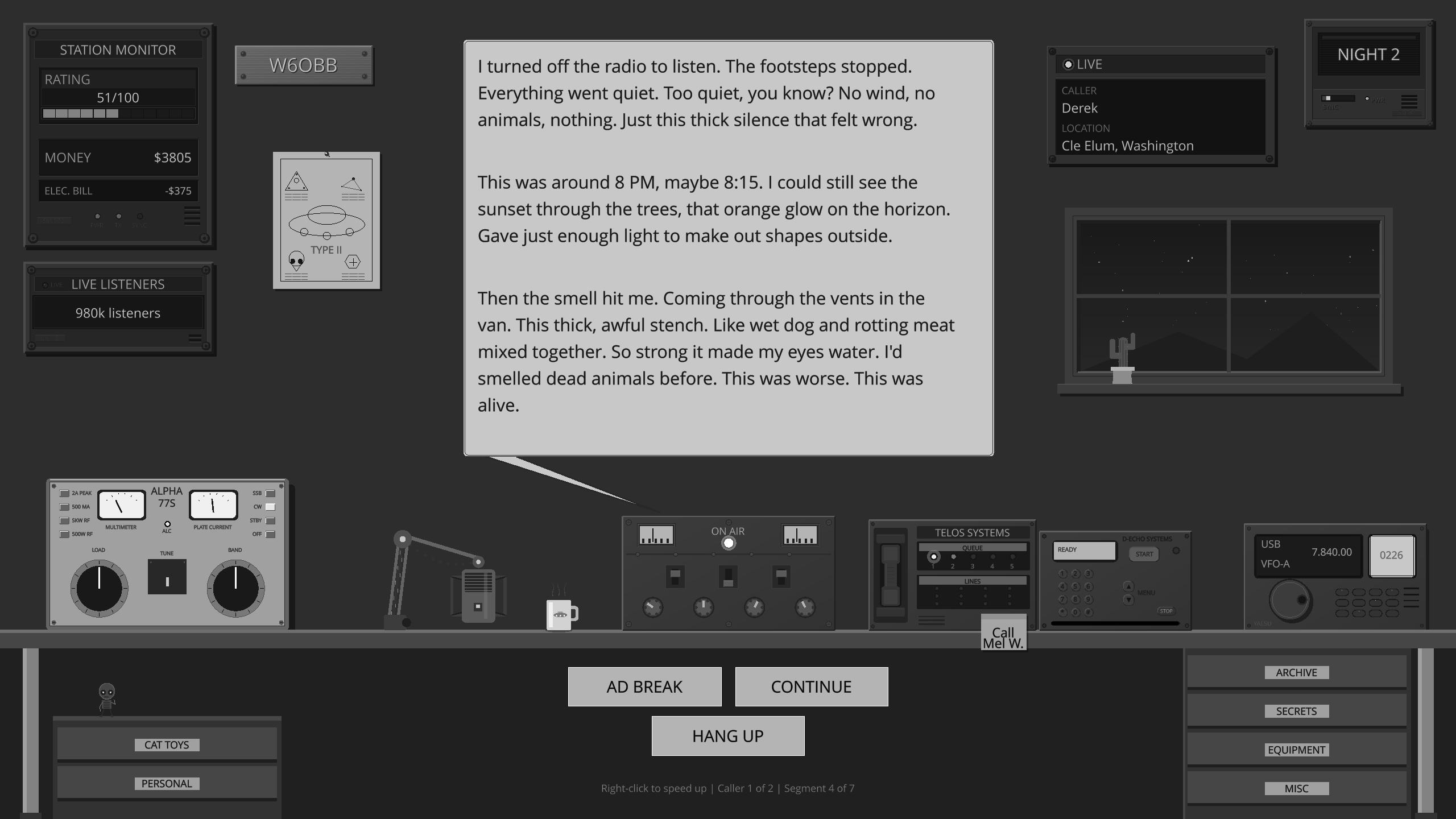
Ever wanted to host your own late-night paranormal radio show?
Across the Airwaves
You're on the air. Callers bring Mothman, Fresno Nightcrawlers, UFO sightings, reptilian autopsies, and whispers about AATIP and Project Blue Book. Every reply shapes how the night goes.

AI-Generated Summary
A radar sighting in Cincinnati on June 21, 1956, was initially reported as an unidentified phenomenon but was officially concluded by the Air Technical Intelligence Center to be ground clutter caused by atmospheric refraction.
This document details a radar sighting reported on June 21, 1956, in Cincinnati, Ohio. At 0636 hours, two meteorologists and an electronics engineer observed an unidentified echo on a Decca Model 40 (3 cm) radar scope. The echo appeared at 065 degrees on the 20-mile range ring. According to the witness, the echo's brightness was similar to that of ground clutter. On the second sweep of the scanner (6 seconds later), the center of the reflective field had moved approximately 4 to 5 miles. The first echo retained its brightness, while a second echo appeared due north of the first. By the time the scanner made another sweep, the echoes had scattered, faded, and taken the shape of small wings before disappearing completely. The witness, a staff meteorologist, completed a U.S. Air Force Technical Information Sheet on August 10, 1956, noting that the observation lasted 9 seconds. The witness explicitly stated in their report that they believed the reflective field was not caused by weather or other types of interference. However, the official Air Technical Intelligence Center (ATIC) evaluation, documented in a disposition form dated August 21, 1956, concluded that the signal was caused by ground clutter. Colonel Gordon C. Hoffman noted that a variation in the index of refraction in the atmosphere likely caused the radar beam to bend and strike the ground, creating the phenomenon. The case was subsequently closed with the recommendation that future radar detections of UFOs should include identification of the radar equipment and an estimation of target size based on the spot size on the radar indicator.
A variation in the index of refraction in the propagation medium, in this case the atmosphere, causes the R.F beam to bend and strike the ground.
PDF not loading? Download the PDF directly
Official Assessment
Ground clutter.
Radar analysis indicates ground clutter as the most probable cause. A variation in the index of refraction in the atmosphere caused the R.F. beam to bend and strike the ground.
Witnesses
- [illegible]Staff Meteorologist
Key Persons
- Henry C. MileyAFOIN-4E4