Declassified UFO / UAP Document
Air Intelligence Information Report: Unknown Tracks B-14-G and B-97-G
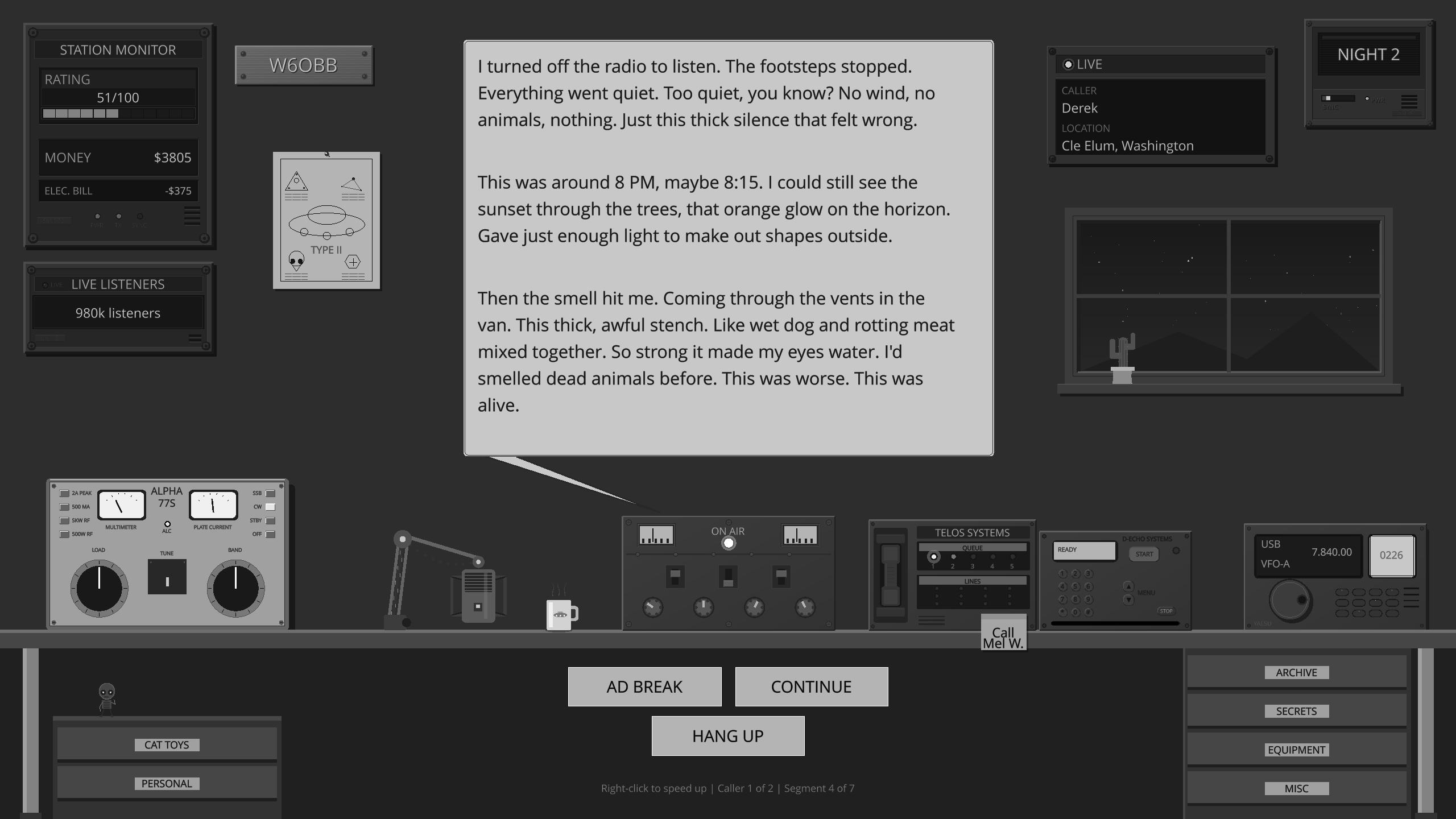
Ever wanted to host your own late-night paranormal radio show?
Across the Airwaves
You're on the air. Callers bring Mothman, Fresno Nightcrawlers, UFO sightings, reptilian autopsies, and whispers about AATIP and Project Blue Book. Every reply shapes how the night goes.

AI-Generated Summary
This report investigates unidentified radar tracks in the Pacific ADIZ on 13 May 1953. It concludes that the radar blips were likely caused by atmospheric temperature inversions rather than physical aircraft.
This Air Intelligence Information Report, dated 16 May 1953, details the investigation into unidentified radar tracks designated B-14-G and B-97-G, which occurred in the Pacific Air Defense Identification Zone (ADIZ) off the coast of the Pacific Northwest on 13 May 1953. The report documents a series of radar plots observed by ground stations, specifically Station P-57, between 0415Z and 0636Z. Multiple interceptor aircraft, including those from the 317th Fighter Interceptor Squadron, were scrambled to investigate the tracks. Despite these efforts, no visual contact was made with any unidentified objects. The report includes statements from pilots Captain S. D. Tate and 2nd Lt D. L. Rodgers, who described their attempts to intercept the targets. They reported that their radar equipment picked up contacts that appeared to be ground returns or chaff, and they were unable to locate any physical objects. The investigation also coordinated with the Coast Guard, Navy, and RCAF, none of which reported unusual air activity. A significant factor identified in the report is the presence of a temperature inversion, which was confirmed by a radio sonde observation at Tatoosh Island. The report suggests that this atmospheric condition, combined with the sea state, likely caused radar energy to be reflected in a way that created false blips on the radar scopes. The report notes that Station P-44, which was located below the inversion layer, did not detect the tracks, while Station P-57, located above it, did. The report concludes that the radar activity was likely the result of this atmospheric phenomenon rather than actual airborne objects, though it acknowledges that no firm conclusions could be reached regarding the identity of the tracks. The document includes charts and overlays of the tracks, as well as information regarding a Moby Dick Project balloon that was in the area, though it was not identified as the source of the radar tracks.
Several unidentified blips occurred on radar sets, both airborne and ground. A/c attempted interception. None of the 5 a/c could make visual contact. Temperature inversion noted.
PDF not loading? Download the PDF directly
Official Assessment
RADAR INTERFERENCE DUE TO INVERSION. Inversion effects on all radar in area.
The report concludes that the radar blips were likely caused by atmospheric temperature inversions affecting radar propagation, rather than actual airborne objects. This is supported by the fact that intercepting aircraft could not make visual contact, and that the sea state in the area may have created conditions for radar reflection under specific atmospheric conditions. The report notes that station P-44, which was below the inversion layer, did not detect the tracks, while P-57, which was above it, did.
Witnesses
- S. D. TateCaptain, USAF317th Fighter Interceptor Squadron
- D. L. Rodgers2nd Lt, USAF317th Fighter Interceptor Squadron
Key Persons
- D. V. JensenGCI Director, Station P-57
- DeckertMajor, Operations Officer of 317th Fighter Interceptor Squadron
- D. JarrettCaptain, Pronto Blue pilot
- A. Young1st Lt, Pronto White pilot