Declassified UFO / UAP Document
Project 10073 Record Card — Angoon, Alaska, 6 December 1952
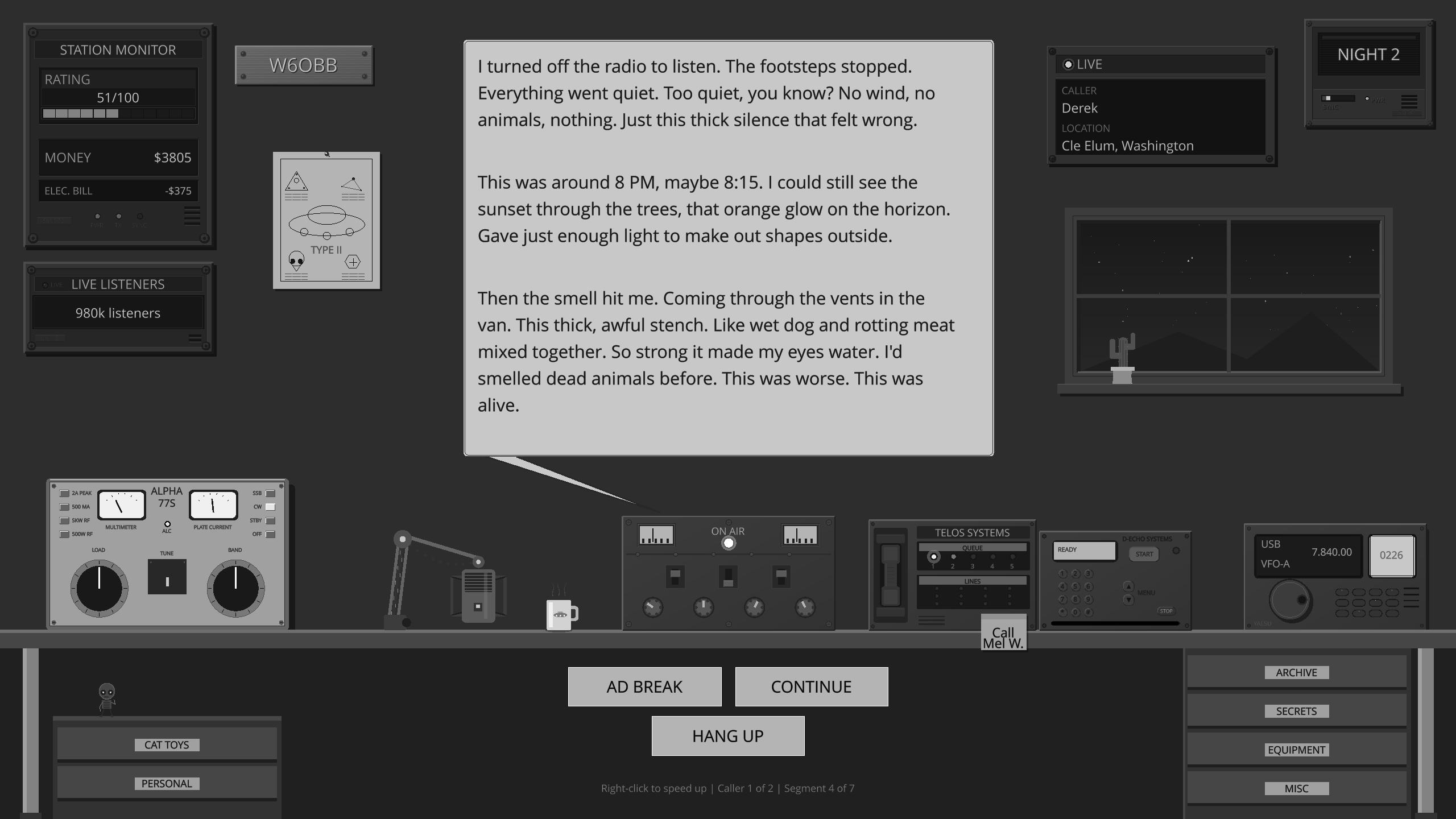
Ever wanted to host your own late-night paranormal radio show?
Across the Airwaves
You're on the air. Callers bring Mothman, Fresno Nightcrawlers, UFO sightings, reptilian autopsies, and whispers about AATIP and Project Blue Book. Every reply shapes how the night goes.

AI-Generated Summary
An Air National Guard pilot reported two shiny, rod-connected globes over Angoon, Alaska, in 1952. The investigation concluded there was insufficient data to identify the objects.
On December 6, 1952, at 1915Z, an Air National Guard pilot reported an unidentified aerial phenomenon near Angoon, Alaska. The pilot observed two shiny, globe-shaped objects connected by a solid rod, traveling in a southerly direction. The sighting lasted for approximately three minutes. The pilot noted that the objects appeared to have a flattened appearance when viewed from the rear and estimated their size to be comparable to a Grumman Goose aircraft. The objects were observed at an altitude of 2,000 feet, traveling at a speed of 150 knots. The pilot attempted to follow the objects until they accelerated and disappeared into the sun. Weather conditions at the time of the sighting were reported as clear. The pilot observed no lights, vapor trails, or exhaust smoke associated with the objects. Official analysis of the incident, conducted under Project 10073, concluded that the report was too sketchy and vague to reach a definitive conclusion. While the description was noted to be similar to reports of known upper air research balloons—a theory supported by the objects' apparent gain in altitude—the lack of specific wind direction data prevented investigators from confirming a correlation between the objects' flight path and upper air wind currents. Consequently, the official determination for the incident was that there was insufficient data to evaluate the phenomenon.
This report is very sketchy and vague and there is not sufficient information to come up with a conclusion.
PDF not loading? Download the PDF directly
Official Assessment
Insufficient data to evaluate.
The report is considered sketchy and vague. The description is similar to known upper air research balloons, and the object's gain in altitude supports this, though the lack of wind data prevents a definitive link to wind currents.