Declassified UFO / UAP Document
Project 10073 Record Card and Related Correspondence
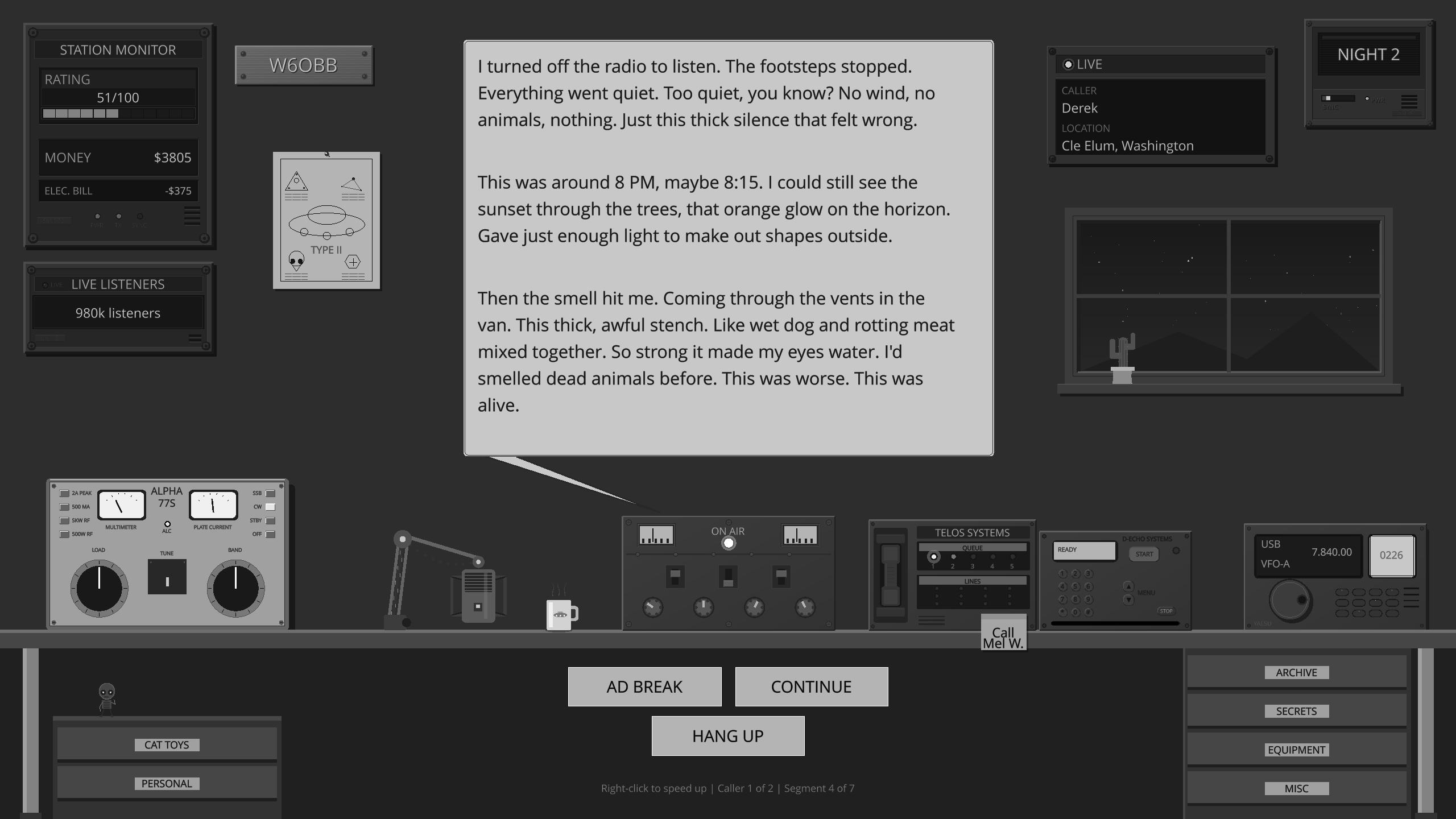
Ever wanted to host your own late-night paranormal radio show?
Across the Airwaves
You're on the air. Callers bring Mothman, Fresno Nightcrawlers, UFO sightings, reptilian autopsies, and whispers about AATIP and Project Blue Book. Every reply shapes how the night goes.

AI-Generated Summary
This file contains two 1951 UAP sighting reports: one identified as Venus and another in Columbus, Ohio, which investigators determined could not be a weather balloon based on wind data.
This document contains records and correspondence regarding two separate Unidentified Aerial Phenomena (UAP) sightings reported in October 1951. The first report, dated 1 October 1951, concerns an observation at Ellington AFB, Texas. The witness described a whitish-blue, 12-inch diameter object at an altitude of 400-500 feet, which appeared to emit constant rays of light similar to a glittering diamond. This incident was evaluated by the Air Technical Intelligence Center (ATIC) as the planet Venus. The second report, dated 2 October 1951, details a sighting in Columbus, Ohio, by a graduate physicist from the Battelle Memorial Institute. The witness observed a bright, circular object traveling directly west at high speed for approximately one minute. The witness, who had no aircraft experience, explicitly noted that the object did not appear to be a balloon or a parachute, and that it followed a straight-line path without changing altitude or maneuvering. Correspondence from 9 October 1951, addressed to Lt. Col. M. J. Piatnitza at Wright-Patterson Air Force Base, provides further analysis of this second sighting. The author notes that weather data from the W-P AFB Weather Station indicates that the object could not have been a weather balloon, as it would have been traveling into the wind at high altitudes, and a balloon launched at 1500 hours would have risen too high to be seen by the time of the 1800-hour sighting. The document includes sketches and technical notes regarding the object's appearance and the witness's observations, emphasizing the witness's belief that the object was of a real, physical origin rather than a visual illusion or reflection.
The original brightness of the object, its straight-line path, its gradual fading from sight as though getting farther away, and the length of the period of observation assured the source that the object was of a real origin and not due to reflection from the ground or false visual perceptions caused by looking into the sky.
PDF not loading? Download the PDF directly
Official Assessment
Evaluated as Astro VENUS (1 Oct); Very Possibly balloon (2 Oct - initial assessment, later contested)
The 1 October sighting was evaluated as the planet Venus. The 2 October sighting was initially suspected to be a balloon, but subsequent analysis of wind data and the object's flight path suggested it could not have been a balloon.
Key Persons
- M. J. PiatnitzaLt. Col.