Declassified UFO / UAP Document
Project Grudge Special Report No. 1: Fort Monmouth, N.J. Incidents (10-11 September 1951)
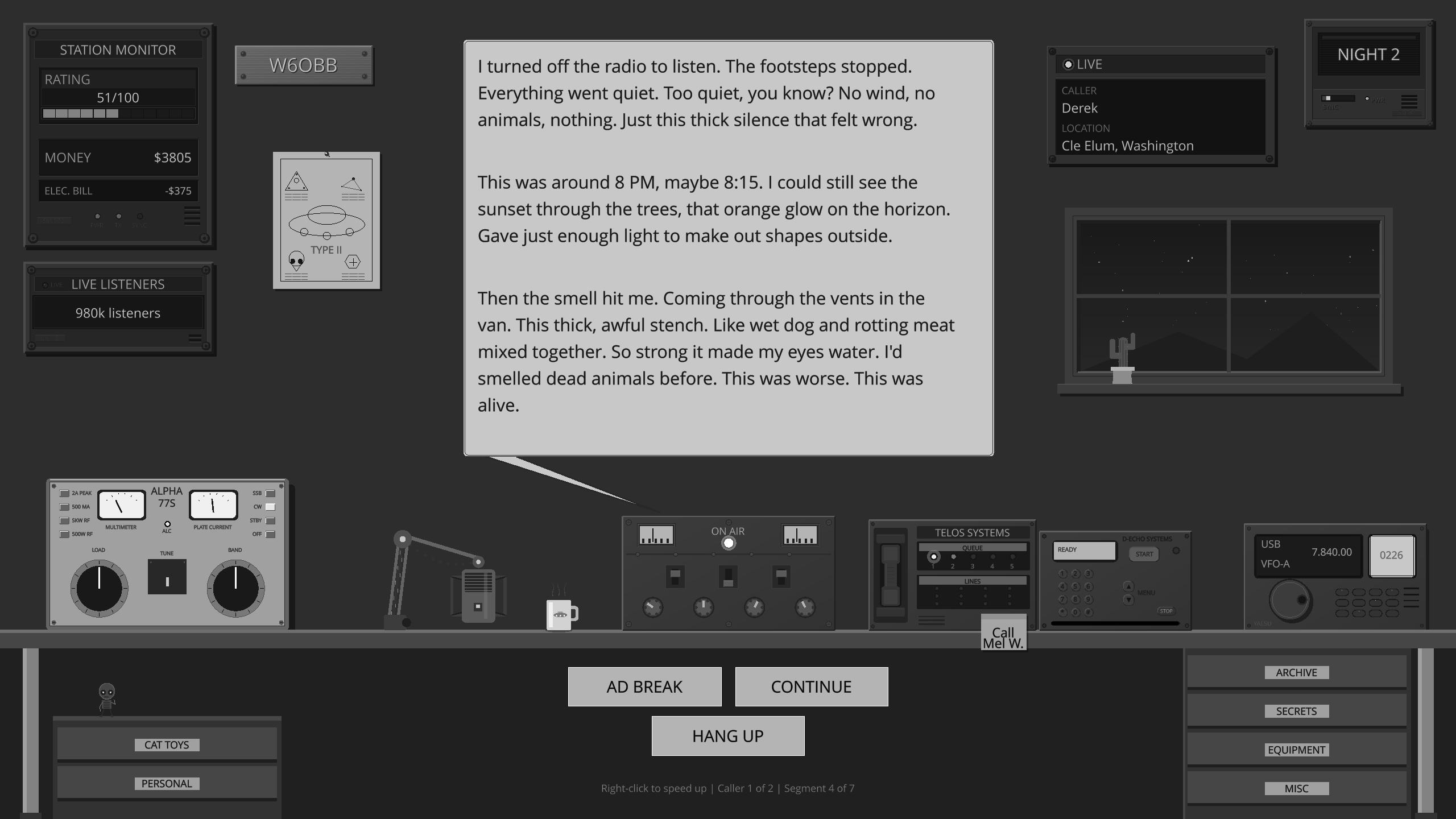
Ever wanted to host your own late-night paranormal radio show?
Across the Airwaves
You're on the air. Callers bring Mothman, Fresno Nightcrawlers, UFO sightings, reptilian autopsies, and whispers about AATIP and Project Blue Book. Every reply shapes how the night goes.

AI-Generated Summary
This report documents an investigation into multiple radar and visual sightings of unidentified objects at Fort Monmouth, New Jersey, in September 1951. It concludes that most incidents were likely caused by weather balloons or radar anomalies, exacerbated by inexperienced student operators.
This document is a comprehensive special report from the Eastern Air Defense Force regarding a series of unidentified aerial object sightings and radar contacts reported at Fort Monmouth, New Jersey, on 10 and 11 September 1951. The report details multiple incidents involving both visual sightings by Air Force pilots and radar tracking by student operators at the Fort Monmouth training center. On 10 September, an AN/MPG-1 radar set tracked a fast-moving target that was initially mistaken for a ship but later identified as a potential balloon. Simultaneously, pilots in a T-33 aircraft reported sighting a silver, disc-shaped object over Sandy Hook, New Jersey, which they described as highly maneuverable and capable of high speeds. The report includes detailed transcripts of interrogations conducted by Colonel N. R. Rosengarten and Lieutenant Jerry W. Cummings, who interviewed the involved personnel to establish the facts. The investigation faced significant challenges, including the confusion of student operators, the lack of formal records, and the impact of media coverage on the witnesses. The report concludes that most of the radar sightings were likely caused by weather balloons or anomalous propagation, noting that the student operators were inexperienced and prone to excitement. The document also includes correspondence between various military agencies, including the Air Technical Intelligence Center (ATIC), regarding the evaluation of these incidents and the need for a thorough investigation. The report emphasizes that while some sightings could be explained by known phenomena, others remained difficult to categorize due to the lack of accurate data and the psychological state of the observers at the time. The final conclusions suggest that the sightings were not indicative of unconventional aircraft but rather a combination of weather balloons, radar anomalies, and human error.
The design of the OBJ could be said to be identical to a discus as is used in track events.
PDF not loading? Download the PDF directly
Official Assessment
Most sightings attributed to weather balloons or anomalous propagation.
Targets were likely weather balloons or radar anomalies; student operators were inexperienced and prone to excitement.
Witnesses
- John E. DickersonCWO, USAAsst Chief, Radar Br.
Key Persons
- Herbert S. BennetDr., EWC, Fort Monmouth, N.J.
- Bruce K. BaumgardnerLt. Colonel, USAF, Director of Intelligence