Declassified UFO / UAP Document
Report of Unusual Sighting on Flight 125/9 February 1951
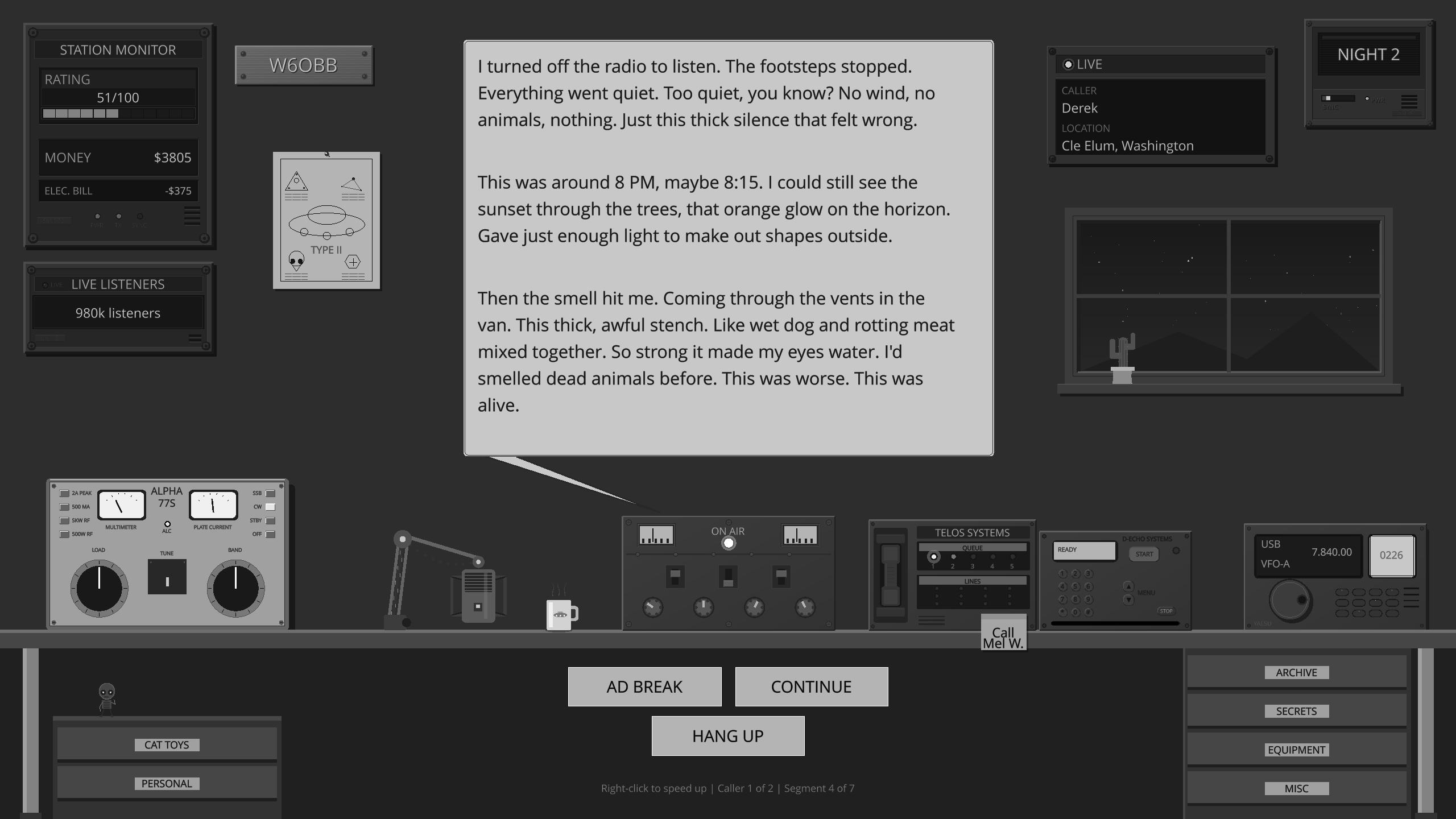
Ever wanted to host your own late-night paranormal radio show?
Across the Airwaves
You're on the air. Callers bring Mothman, Fresno Nightcrawlers, UFO sightings, reptilian autopsies, and whispers about AATIP and Project Blue Book. Every reply shapes how the night goes.

AI-Generated Summary
A U.S. Navy flight crew reported a high-speed, glowing, circular object over the North Atlantic on February 10, 1951. Despite the crew's detailed account of the object's maneuvers, the Air Materiel Command officially attributed the sighting to an unusual aurora display.
On February 10, 1951, the crew of a U.S. Navy R5D aircraft (Flight 125/09) witnessed an unidentified aerial object while en route from Keflavik, Iceland, to Argentia, Newfoundland. At approximately 0055Z, while flying at 10,000 feet, the crew observed a glowing, yellowish-orange light beneath a thin layer of strato-form clouds. The object, initially estimated to be 300 feet in diameter, appeared to be on a collision course with the aircraft. As it approached, it grew significantly brighter and larger, displaying a circular shape with a glowing orange-red edge. The object then executed a 180-degree turn and disappeared over the horizon at a speed estimated by the crew to be well over 1,500 miles per hour.
The crew, including Plane Commander Fred W. Kingdon, Jr., Co-Pilot Graham E. Bethune, and Navigator Noel J. P. Koger, reported the incident to Gander Air Traffic Control, which confirmed no other aircraft were in the area. Upon landing at Argentia, the crew was interrogated by Captain D. H. Paulsen of the USAF. The incident was subsequently documented in a series of reports and memoranda under Project 10073. The Air Materiel Command (AMC) reviewed the reports and consulted with an astronomer at the AMC Graduate Center. The official conclusion reached by the AMC was that the sighting was likely an unusual 'Northern Lights' (aurora) display, although the aircrew's detailed descriptions of the object's physical characteristics and rapid, controlled maneuvers suggest they did not share this assessment. The document includes individual statements from seven crew members, all of whom were experienced North Atlantic fliers, and reflects the military's attempt to reconcile the anomalous report with known natural phenomena.
The yellowish light, like a fire in color, approached the observing ACFT and grew very bright and very large with a semi-circular shape. It suddenly turned 180 deg and disappeared over the horizon at terrific speed.
PDF not loading? Download the PDF directly
Official Assessment
Believed to be Aurora display by consulting astronomer.
The object was initially thought to be a ship or city lights, but its speed and behavior led to an investigation. An astronomer consulted by the Air Materiel Command suggested it was an unusual 'Northern Lights' display, though the crew remained skeptical.
Witnesses
- Fred W. Kingdon, Jr.LT, U. S. NavyFleet Logistic Air Wing, Atlantic/Continental, Air Transport Squadron One
- Graham E. BethuneLT, U. S. Naval ReserveFleet Logistic Air Wing, Atlantic/Continental, Air Transport Squadron One
- Noel J. P. KogerLT, U. S. NavyFleet Logistic Air Wing, Atlantic/Continental, Air Transport Squadron One
- A. L. JonesLTJG, US. S. NAVYFleet Logistic Air Wing, Atlantic/Continental, Air Transport Squadron One
- John M. MeyerLT, U. S. NavyFleet Logistic Air Wing, Atlantic/Continental, Air Transport Squadron One
- Quentin R. ShieverALC, U. S. NAVYFleet Logistic Air Wing, Atlantic/Continental, Air Transport Squadron One
- Gerald R. DanielsAE3, U. S. NavyFleet Logistic Air Wing, Atlantic/Continental, Air Transport Squadron One
Key Persons
- D. H. PaulsenCapt., USAF, interrogated crew
- WehmeyerCDR, C.O., VP-8, Argentia