Declassified UFO / UAP Document
Sighting of Flying Disc (Fragment of Metal found on Canal and Bourbon Street Intersection, New Orleans, La.)
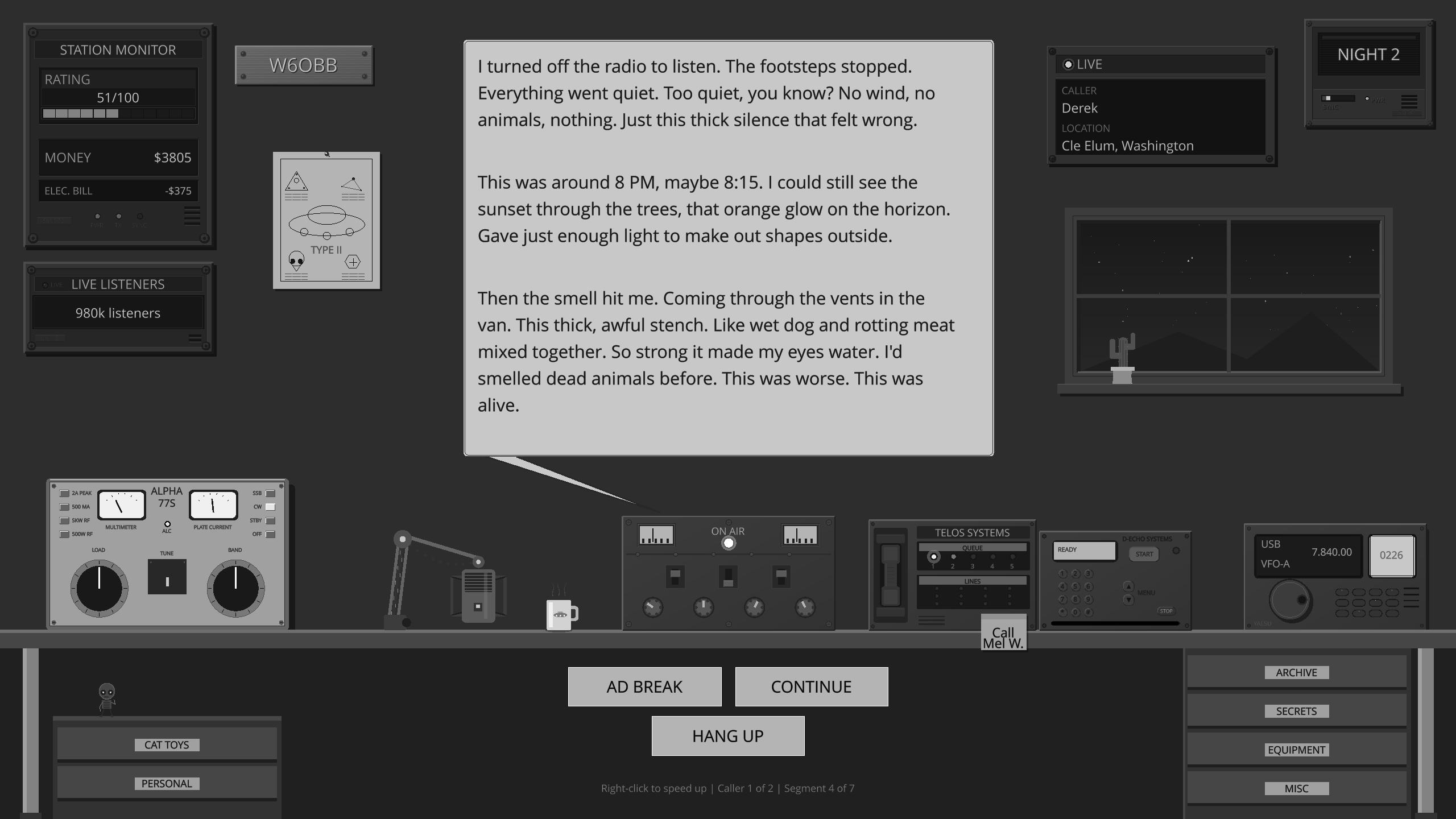
Ever wanted to host your own late-night paranormal radio show?
Across the Airwaves
You're on the air. Callers bring Mothman, Fresno Nightcrawlers, UFO sightings, reptilian autopsies, and whispers about AATIP and Project Blue Book. Every reply shapes how the night goes.

AI-Generated Summary
This report documents the recovery and subsequent metallurgical analysis of a metal fragment found in New Orleans in 1949. The Air Materiel Command concluded the object was a sand-cast aluminum alloy of ordinary commercial quality.
This document details the investigation into a reported sighting of a 'flying disc' in New Orleans, Louisiana, on August 13, 1949. At approximately 2145 hours, witnesses at the intersection of Canal and Bourbon Streets reported hearing a sharp explosion followed by a whirring sound, after which a metal object struck the pavement. A local police patrolman took the object into custody, and it was subsequently transferred to the 9th District Office of Special Investigations (OSI) at Barksdale Air Force Base. The object was described as pie-shaped, with a silvery-gray color underneath a sooty exterior, and varying in thickness from one-eighth to one-half inch. Witnesses included the police officer, a railroad employee, and a news vendor. OSI agents conducted an investigation of the surrounding buildings to determine if the object had fallen from a structure, but they were unable to locate a source. The object was eventually forwarded to the Air Materiel Command at Wright-Patterson Air Force Base for metallurgical analysis. The laboratory report concluded that the item was a sand-cast aluminum alloy of ordinary commercial quality, likely equivalent to Alcoa 113 alloy. Microscopic examination revealed significant porosity and partial recrystallization of the outer grain layers, suggesting the part had been subjected to high temperatures. A grayish-black surface deposit was identified as containing calcium carbonate and metallic elements including aluminum, silicon, and magnesium. The investigation was officially closed by the 9th District OSI on September 14, 1949, with no further action contemplated. The report includes photographs of the fragment and correspondence between the OSI and the Air Materiel Command regarding the transfer and analysis of the material.
The submitted sample was a cast aluminum alloy of ordinary commercial quality. It was a sand casting, and probably made from a material equivalent to Alcoa 113 alloy.
PDF not loading? Download the PDF directly
Official Assessment
Other (Cast Aluminum Alloy of Ordinary Commercial Quality)
The object was a sand-cast aluminum alloy, likely equivalent to Alcoa 113 alloy, with significant porosity and evidence of exposure to high temperatures. A grayish-black deposit on the surface contained calcium carbonate and metallic elements including aluminum, silicon, and magnesium.
Witnesses
- [illegible]PatrolmanNew Orleans City Police
- [illegible]Illinois Central Railroad
- [illegible]
Key Persons
- J. J. Hemstreet, Jr.Lt Colonel, USAF, Chief, Technical Analysis Division
- Baskin L. Lawrence, Jr.Colonel, USAF, Chief, Materials Laboratory
- Edward R. FordMajor, USAF, District Commander
- Harold E. WatsonColonel, USAF, Chief, Intelligence Department
- John C. McLendonLt Colonel, USAF, District Commander