Declassified UFO / UAP Document
Incident #306 Sighting Report — Arrey, New Mexico, 24 April 1949
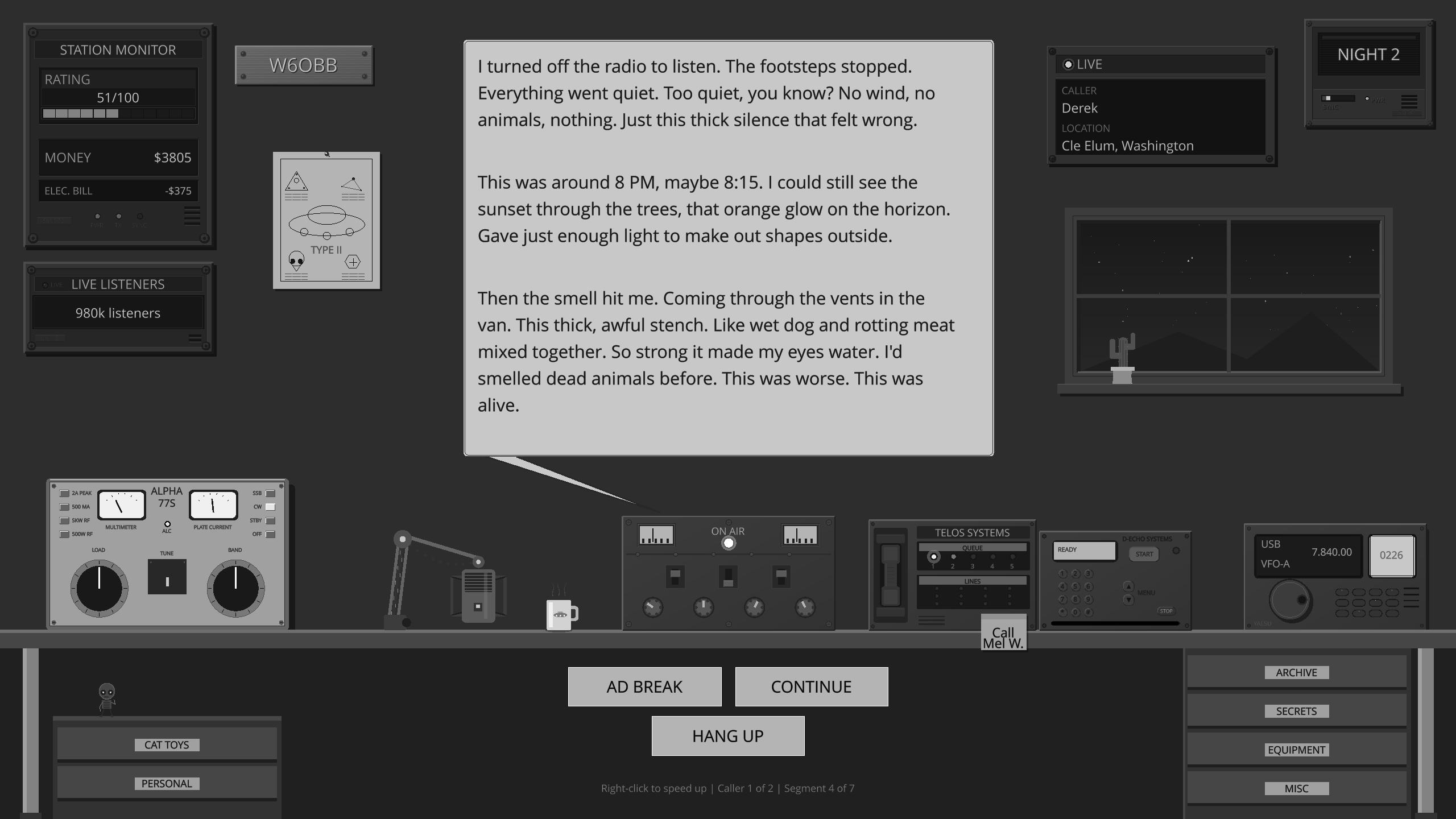
Ever wanted to host your own late-night paranormal radio show?
Across the Airwaves
You're on the air. Callers bring Mothman, Fresno Nightcrawlers, UFO sightings, reptilian autopsies, and whispers about AATIP and Project Blue Book. Every reply shapes how the night goes.

AI-Generated Summary
A 1949 sighting of an unidentified object by Navy personnel in New Mexico was officially determined to be a misidentification. The report highlights the difficulties in estimating the speed and altitude of objects without reliable reference points.
This document details a sighting of an unidentified aerial object on 24 April 1949, near Arrey, New Mexico, by four Navy enlisted men from the White Sands Proving Ground. The observers were conducting a pibal wind run using a standard ML-47 theodolite when they spotted a whitish, ellipsoid object. They initially believed it to be the weather balloon they had just released, but upon checking the theodolite, they realized the balloon was in a different position. The object was described as having a 2 1/2:1 slenderness ratio, appearing white with a light yellow tint on one side, and moving at a high angular speed of 5° per second. The observers estimated the object's altitude at 300,000 feet, assuming it was traveling at escape velocity. The report includes detailed correspondence between the Base Directorate for Geophysical Research and the 3160 Electronics Station regarding the incident. USAF consulting specialists analyzed the data and concluded that the object was almost certainly misidentified. They noted that the observers had no reliable way to determine distance, as they lacked a known reference point, and that the object was likely a small, mundane item at a much closer range than the observers believed. The document also contains technical discussions regarding the use of weather balloons, noting that they do not carry lights or luminescent materials, and provides information on future balloon launch schedules for sites in New Mexico, Oklahoma, Arizona, and Nevada. Major Joseph O. Fletcher, writing for the Commanding Officer, criticized the existing observation questionnaire for being misleading and recommended that future instructions be improved to prevent similar errors in judgment by observers in the field.
The questionable data in this incident, the extremely short time of observation and the overwhelming evidence of misidentification in other cases, leads to the conclusion that the object seen was misidentified by the observers.
PDF not loading? Download the PDF directly
Official Assessment
The object was misidentified by the observers.
USAF specialists concluded that the object was likely a small object at a much closer range than suspected, and that the observers' estimates of speed and altitude were unreliable due to the lack of a known reference point.
Witnesses
- 4 Navy enlisted menNavy enlisted menWhite Sands Proving Ground
Key Persons
- Dr. PeoplesStation personnel consulted regarding observation problems
- C. B. MooreGeneral Mills, Inc. employee, formerly with New York University balloon project