Declassified UFO / UAP Document
Psychological Analysis of Reports of Unidentified Aerial Objects
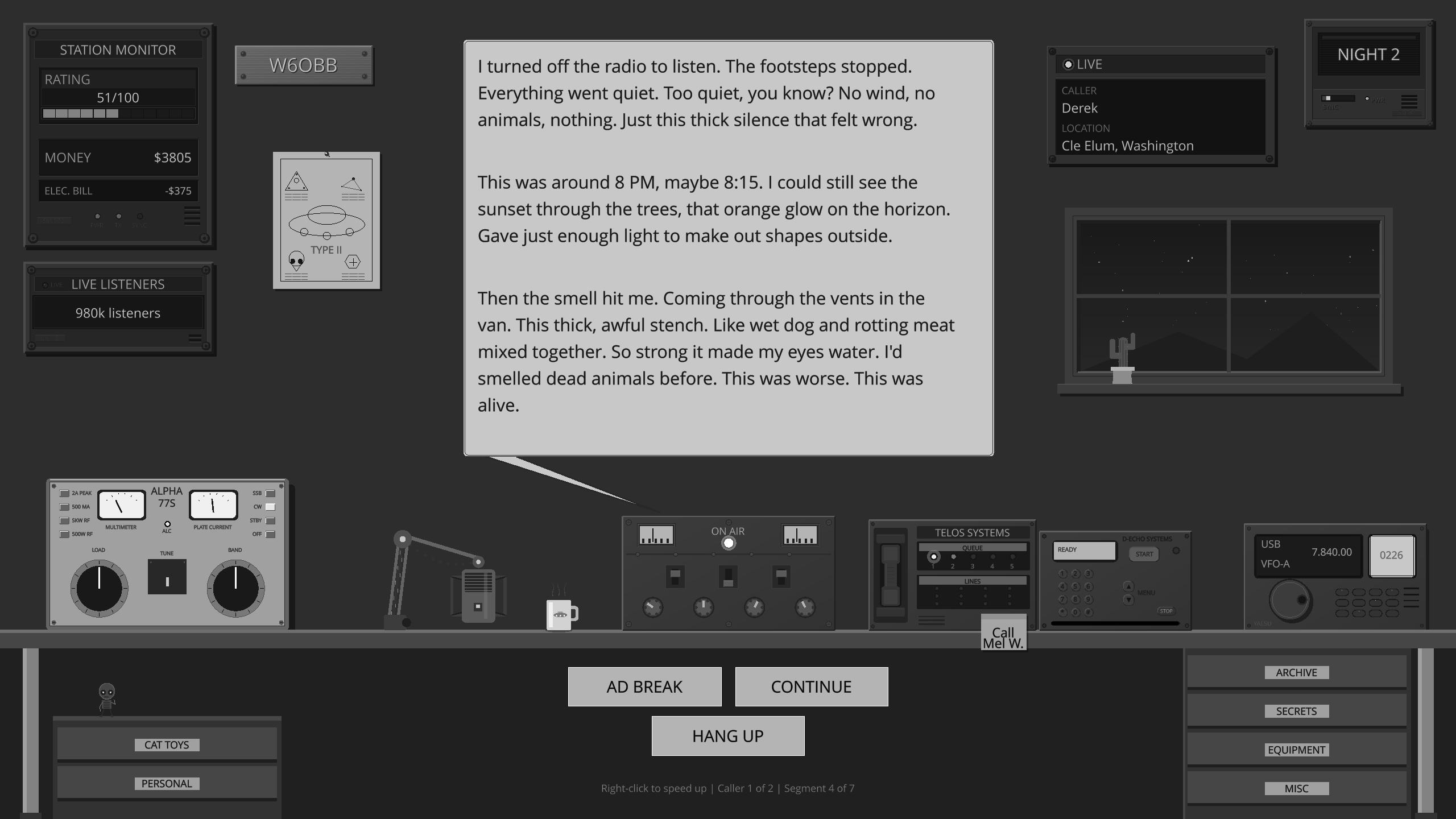
Ever wanted to host your own late-night paranormal radio show?
Across the Airwaves
You're on the air. Callers bring Mothman, Fresno Nightcrawlers, UFO sightings, reptilian autopsies, and whispers about AATIP and Project Blue Book. Every reply shapes how the night goes.

AI-Generated Summary
This 1949 Air Force report provides a psychological analysis of 212 UFO sighting reports, concluding that most are misinterpretations of conventional objects or the result of human perceptual errors. It recommends standardized data collection methods to improve the accuracy of future investigations.
This memorandum report, dated April 28, 1949, from the Engineering Division of the Air Materiel Command, provides a psychological analysis of 212 reports of unidentified aerial objects. The authors, led by Paul M. Fitts of the Aero Medical Laboratory, argue that human perception is inherently fallible, particularly when observers lack familiar reference points to judge the speed, distance, or size of objects in the sky. The report asserts that most sightings can be explained as misinterpretations of conventional objects, such as weather balloons, aircraft, or birds, or as the result of psychological factors like mass hysteria, vertigo, or the tendency of individuals to see what they expect to see. The document details several specific incidents, including sightings at Hickam Field, Van Nuys, and Lockbourne Air Force Base, to illustrate how observers often misjudge the nature and behavior of objects. The authors conclude that there is no direct threat to national security from these objects and recommend that future investigations focus on obtaining more precise data, such as angular positions and visual angles, rather than relying on subjective estimates. The report also highlights the potential for sensationalized media coverage to influence public perception and lead to further inaccurate reports. It emphasizes that the inability to identify objects is often due to the lack of a known stimulus, and that once an object is identified, observers can estimate its characteristics with greater accuracy. The document serves as a foundational psychological assessment within the Project Blue Book series, aiming to standardize the evaluation of sighting reports by applying scientific principles of human observation.
It is concluded by the writer that there are sufficient psychological explanations for the reports of unidentified flying objects to provide plausible explanations for reports not otherwise explainable.
PDF not loading? Download the PDF directly
Official Assessment
It is concluded by the writer that there are sufficient psychological explanations for the reports of unidentified flying objects to provide plausible explanations for reports not otherwise explainable. These errors in identifying real stimuli result chiefly from inability to estimate speed, distance and size.
Most reports of unidentified flying objects are the result of misinterpretation of conventional objects, mass hysteria, or individuals fabricating reports for publicity. The inability of observers to accurately estimate speed, distance, and size of objects viewed against a clear sky is a primary factor in these reports.
Key Persons
- Paul M. FittsChief, Psychology Branch
- Shirley C. ConnettPsychology Branch
- A. F. GageLt. Col., Chief, Aero Medical Operations
- Edward J. HendricksCol., MC (USAF), Chief, Aero Medical Laboratory